How to Recharge Your Smart Meter Online and Offline: A Step-by-Step Guide
Published on 8 May 2026




Start saving on your energy bills right now!
Start saving on your energy bills right now!
Be the first one to know everything about smartest ways to save on your energy bills.
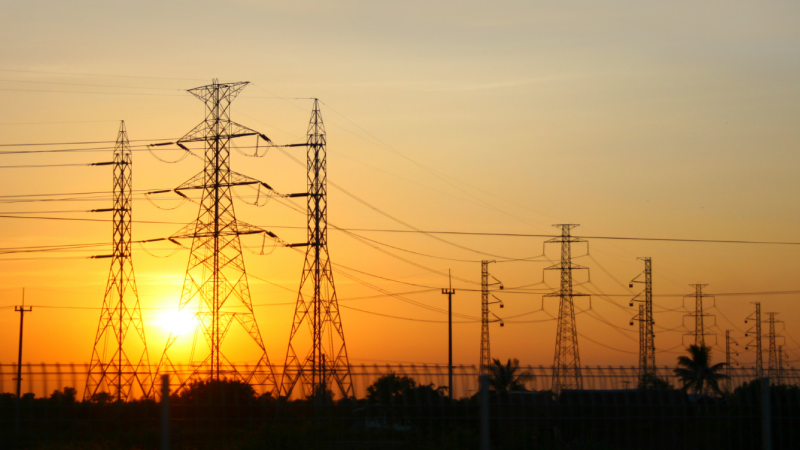
Most of us don’t think about electricity until something goes wrong, a sudden outage, a high bill, or voltage fluctuations at home. But behind that tiny switch on your wall is a massive network called the power grid.
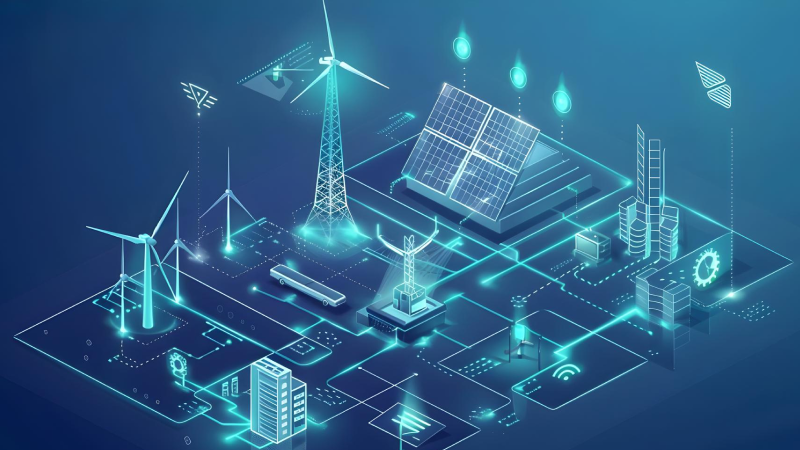
For years, this grid has worked in a fairly simple way: electricity is produced at large power plants, often far away from cities, and then travels through transmission lines and local networks before reaching your home. But today things are changing. With rising demand, renewable energy, and the need for better reliability, this system is evolving into something much more intelligent – the Smart Grid.
Think of it like this:
So what does this really mean for your day-to-day electricity use? Let’s take a closer look.
In a traditional grid, communication is one-way. Electricity is sent to your home, but that’s about it. The system has very little knowledge about how that electricity is being consumed until the end of the billing cycle. During an outage, the utility often only finds out when someone reports it.
A smart gird changes this completely. With a smart grid, communication is two-way. There is constant communication between the smart meters and utility. Smart meters automatically report your usage data and electricity status to the grid in real time. This allows for time-of-use pricing, where electricity is cheaper during off-peak usage.
The flow of energy in a traditional grid is centralized. The energy is produced at a large, far-off source, such as a coal, gas, or hydroelectric power station, and is then transmitted over long distances to reach you. You consume the energy, but don’t really participate in the system.
A smart grid opens that up, making the flow of energy decentralized. It uses Distributed Energy Resources (DER’s) such as solar panels, windmills, etc to supply energy from the nearest source. Let’s say, if homes in your neighbourhood generate extra solar power, that energy can be fed back to the grid and used locally.
You’ve probably been in this situation before, your electricity bill arrives at the end of the month, and you wonder what caused the spike. That’s because traditional grids don’t give much visibility. Meter readings are often taken once a month manually by the technicians.
A smart grid changes that experience. With smart meters and digital sensors, your usage is tracked throughout the day. You can see when you’re consuming the power, how your usage changes and even spot unusual spikes early.
For utilities, this real-time data also means they can detect potential issues before they turn into major outages. Think of it as going from a monthly snapshot, to a live dashboard of your electricity use.
In a fault, such as a tree branch damaging a wire, a technician has to physically locate the fault and repair it. That’s why outages can sometimes take hours to resolve.
A smart grid is able to automatically repair itself in a faulty situation. With its adaptive routing feature, a smart grid can automatically find where the fault is and reroute the electricity around it, often restoring electricity in minutes.
Traditional grids rely heavily on mechanical systems, physical switches and relays that need manual intervention. Smart grids, on the other hand, use digital controls, software, and automation.
For example, during peak demand, like a heatwave, the system can intelligently manage load. In some cases, small adjustments across many homes can reduce overall stress on the grid and prevent large-scale outages. It’s not just about control, it’s about smarter, faster decision-making.
A traditional grid was built for a simpler time – when demand was predictable, power generation was centralised, and visibility was limited. Whereas a smart grid is built for today’s reality: growing electricity demand, renewable energy integration, and the need for reliability and transparency.
That’s exactly what a smart grid enables. It helps you understand, manage, and use electricity more efficiently.
And that’s the real shift. Not just in technology, but in how you experience power every single day.
1. What is a smart grid in simple terms?
A smart grid is an advanced electricity system that uses digital technology to monitor, communicate, and manage power flow in real time.
2. How is a smart grid different from a traditional grid?
A traditional grid works on one-way communication and centralised power generation, while a smart grid enables two-way communication, real-time monitoring, and decentralised energy integration.
3. What role do smart meters play in a smart grid?
Smart meters provide real-time data on electricity usage, enable remote monitoring, and support features like time-of-use pricing and outage detection.
4. Can smart grids help reduce electricity bills?
Yes, by enabling better visibility into consumption and allowing users to shift usage to off-peak hours, smart grids can help optimise energy costs.
5. Are smart grids important for renewable energy?
Absolutely. Smart grids make it easier to integrate renewable energy sources like solar and wind by managing variability and ensuring grid stability.
6. Do smart grids improve power reliability?
Yes, with real-time monitoring and self-healing capabilities, smart grids can detect faults quickly and restore power faster than traditional grids.
1. International Energy Agency (IEA) – Smart grid overview, digitalisation of energy
2. Ministry of Power India – Smart Meter National Programme (SMNP)
3. Ministry of New and Renewable Energy – Rooftop solar and distributed energy
4. Power Grid Corporation of India – Indian grid infrastructure and modernization
Your email address will not be published. Required fields are marked *