
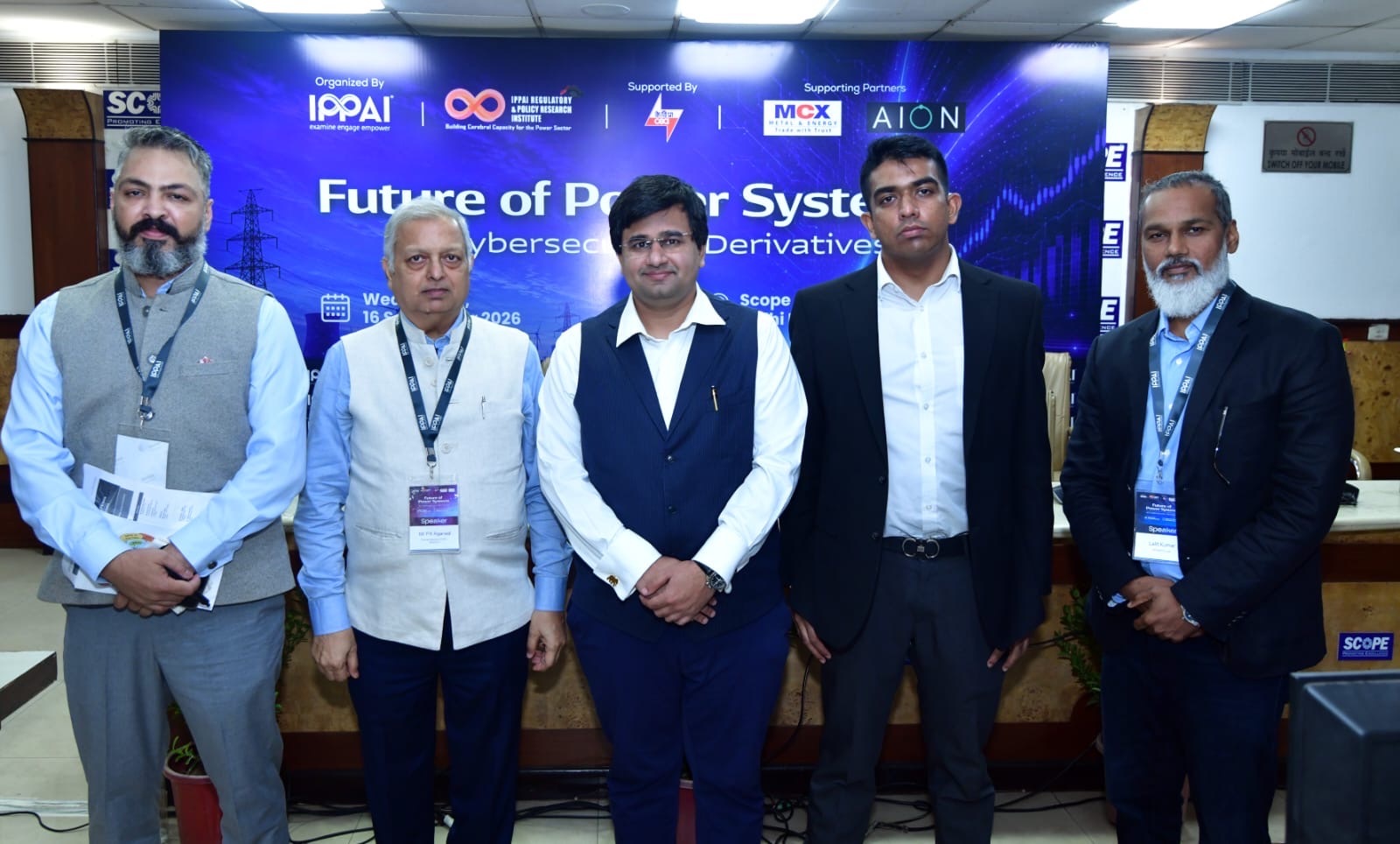
Kimbal Participates in IPPAI’s Future of Power Systems Conference
Published on 22 September 2026


The global energy transition reached another important milestone in 2025. According to the International Energy Agency’s (IEA) Global Energy Review 2026, electricity demand is now growing significantly faster than overall energy demand. Solar energy continues to break records, electric vehicles are becoming mainstream, battery storage is scaling rapidly, and data centres are emerging as a major source of power consumption.
Let’s understand the key trends from 2025 driving the energy transition globally.
Global energy demand grew by 1.3% in 2025. Electricity demand, however, grew by nearly 3%, making it 2.3 times faster than overall energy demand growth.
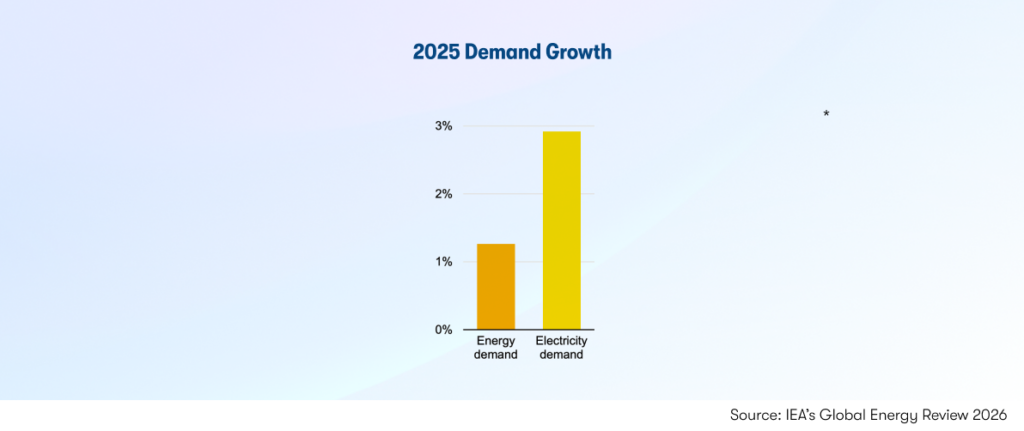
This shift reflects the increasing electrification of economies worldwide. From transportation and industry to buildings and digital infrastructure, electricity is becoming the preferred energy source across sectors.
As this trend continues, the reliability, flexibility, and intelligence of electricity networks will become increasingly important.
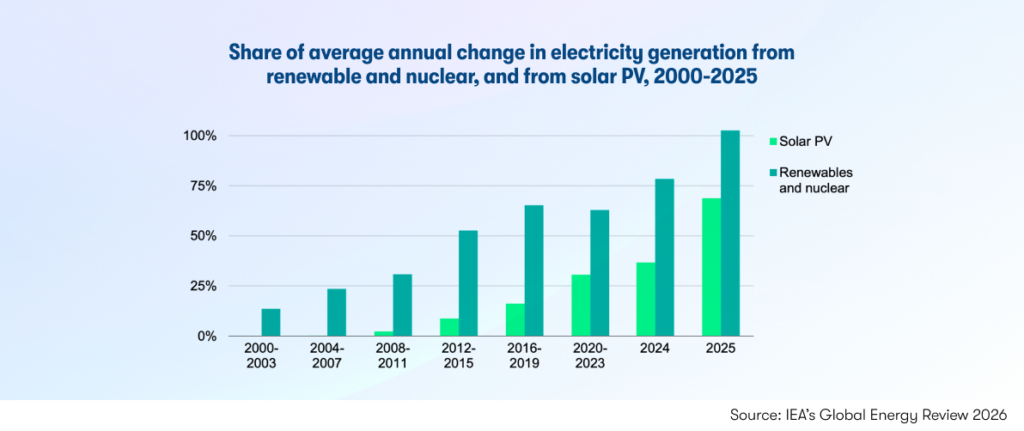
Solar energy achieved a historic milestone in 2025, by becaming the largest contributor to global energy demand growth. It accounted for 27% of the increase in energy demand and added a record 600 TWh of electricity generation during the year.
No other power source has ever delivered such a large annual increase in electricity generation.
The continued expansion of solar capacity across major markets highlights its growing role in meeting rising electricity demand while supporting decarbonisation efforts.
Low-emission energy sources contributed nearly 60% of global energy demand growth in 2025. At the same time, the world added a record 800 GW of renewable energy capacity, demonstrating the scale at which clean energy technologies are being deployed.
Europe reached an important milestone as well. For the first time, solar and wind generated more electricity than fossil fuels across the European Union.
These developments show that renewable energy is no longer supplementing traditional power systems. It is becoming one of their primary growth engines.
The growth of electricity demand is no longer driven by traditional sectors alone. Artificial intelligence, cloud computing, digital services, and electric mobility are creating entirely new demand patterns.
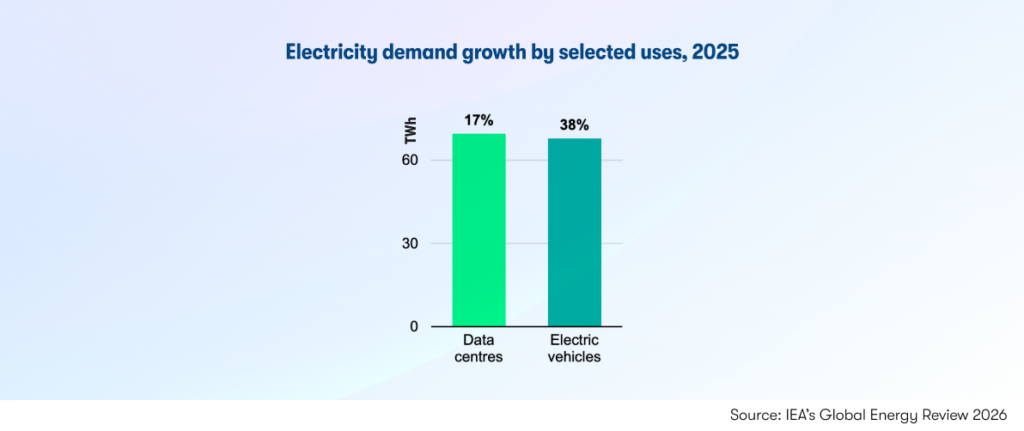
In the United States, data centres accounted for 50% of electricity demand growth in 2025. Globally, electricity consumption from data centres increased by 17% during the year.
At the same time, electric vehicle adoption continued to accelerate. Global EV sales crossed 20 million units, growing by more than 20% year-on-year. One in every four new cars sold worldwide was electric.
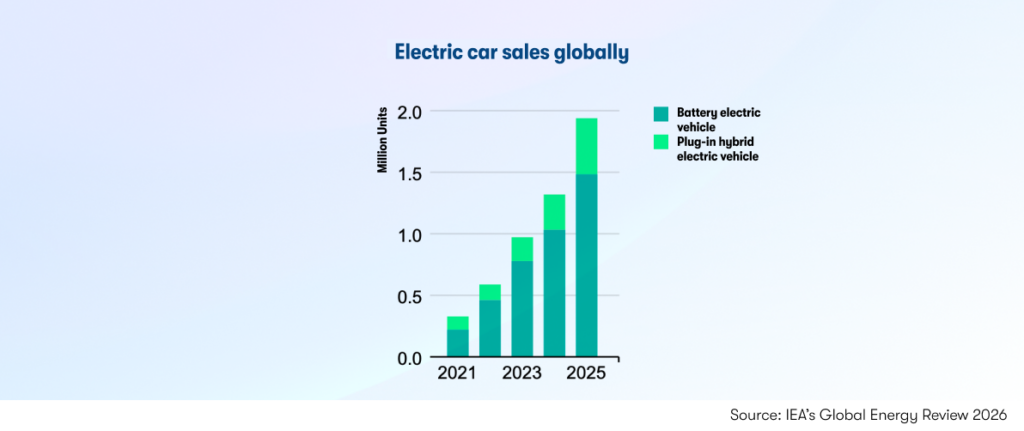
These trends are transforming how power systems operate and increasing the need for smarter energy management.
Battery storage emerged as one of the fastest-growing segments of the energy sector in 2025. The world added 108 GW of battery storage capacity during the year, representing a 40% increase compared to 2024.
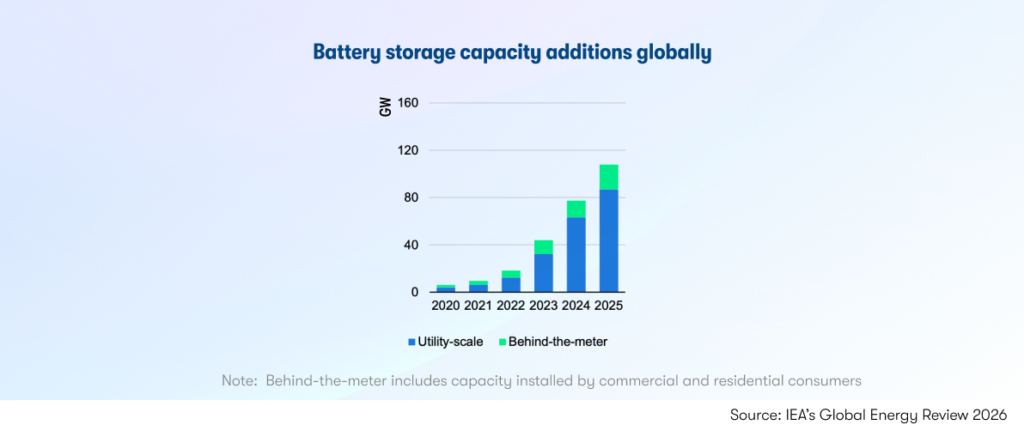
As renewable energy penetration increases, storage will play a critical role in balancing supply and demand, improving grid flexibility, and supporting system reliability.
The rapid growth of battery storage signals a broader shift towards more resilient and responsive electricity networks.
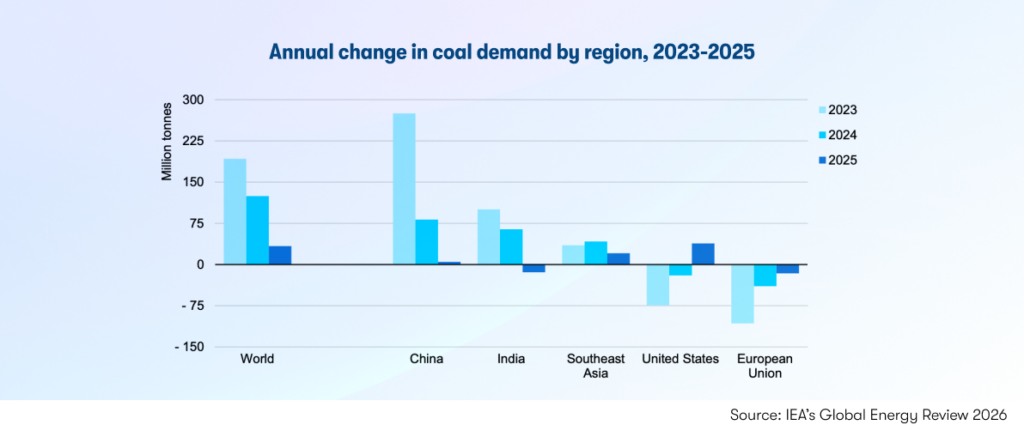
Coal-fired power generation declined by around 3%, supported by strong growth in solar, wind, and hydropower generation. This marked only the third decline in coal-fired generation in the country’s last five decades.
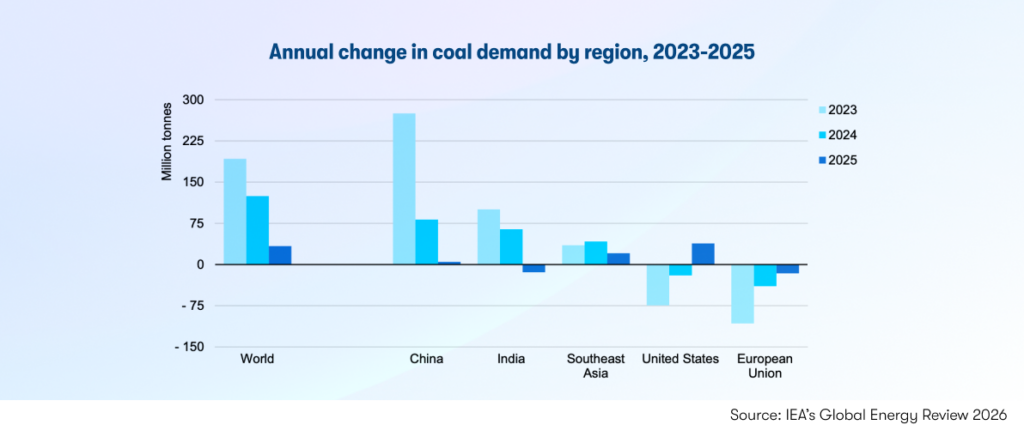
The development highlights the growing contribution of renewable energy to India’s electricity mix and demonstrates how clean energy investments are beginning to reshape the country’s power sector.
According to the IEA, clean technologies avoided fossil fuel consumption equivalent to 7% of global fossil fuel use in 2025.
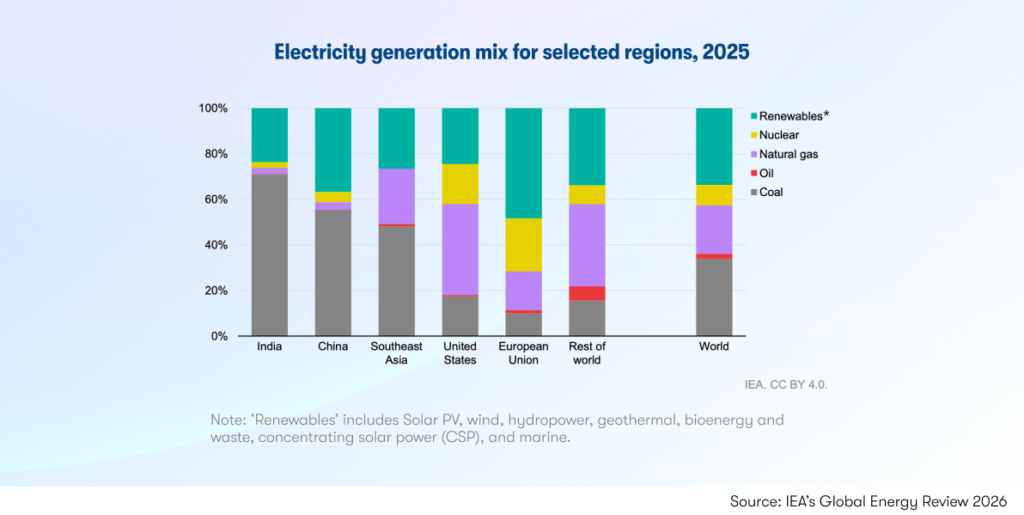
The continued deployment of solar, wind, nuclear power, electric vehicles, and heat pumps since 2019 is now preventing around 3 billion tonnes of CO₂ emissions every year.
These numbers demonstrate that clean energy technologies are no longer future solutions. They are already delivering meaningful results at a global scale.
The global energy transition is no longer defined solely by the growth of renewable energy. It is increasingly being shaped by how efficiently electricity is generated, distributed, stored, and consumed.
Rising electricity demand, the growth of AI-driven infrastructure, large-scale renewable integration, and the rapid adoption of electric mobility are creating more complex power systems. Managing this complexity will require greater visibility, faster decision-making, and smarter energy infrastructure.
The Age of Electricity has arrived. The next challenge is ensuring that power systems are intelligent enough to keep pace with it.
Published on 22 September 2026

Published on 16 September 2026
Published on 15 September 2026
Your email address will not be published. Required fields are marked *