








Transmit data swiftly and
seamlessly
Real-time, uninterrupted data flow for on-time billing and happy customers
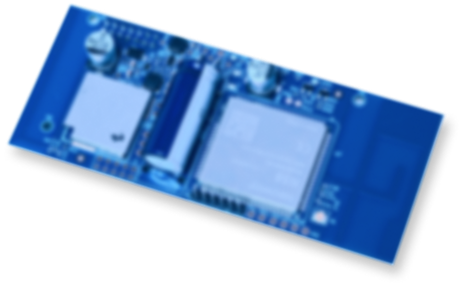
The distinguishing technology
ImGATI’s
Robust Communication Integration
RF-mesh and cellular communication combined in a single pluggable module, Kimbal’s In-meter Gateway is the simplest and smartest way to deploy RF-mesh quickly and without any cumbersome planning for efficient data flow between connected smart meters and central systems, driving economical and uninterrupted energy measurement while meeting industry standards for regulatory compliance.
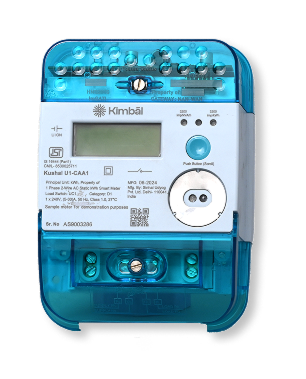
Meet ImGATI
An In-meter Gateway is enabled by RF and backhaul cellular communication technologies for reliable and resourceful real-time data flow that drastically reduces the dependency on standalone gateways by up to 90%
Top features

Strengthen the mesh hassle-free
Adding one in-meter gateway can create upto nodes. A quick and resourceful solution to strengthening the mesh.

Cellular backhaul communication
Smart meter data packets are transmitted to and received from the central server through the cellular network.

Low power consumption
Encourages energy-efficient operation while also extending the battery life of the device.

Robust hardware capacity
The new in-meter gateway supports seamless data flow between up to 150- 200 meters.

Firmware updates
Supports over-the-air (OTA) updates, making maintenance easier and enabling quick feature upgrades.

Battery support
The component has its own battery that will keep the data packets in the RF sink for up to 30 minutes in case of a power outage.

Hot Swappable
Easily and safely insert in a commissioned meter for creating instant and reliable RF-mesh support.

Reliable data transmission
Ensures reliable, resourceful, and real-time data transfer both locally within the meter network and remotely to the central server.
How does this help?

Improved signal coverage
Add additional RF nodes quickly and without hassle to provide wider and more consistent signal coverage while reducing dead zones within the cluster.

Avoid overloading
The system’s architecture is built to support intelligent connection and routing between devices within the cluster without overloading.

Network resilience in dynamic environments
In complex environments(e.g., construction sites, industrial zones, et.al.) in-meter gateway offers the flexibility for the network to swiftly overcome layout challenges and other obstacles.

Avoid Gateway Vandalism
Fewer standalone gateways mean a reduced scope of physical damage, whether intended or natural.

Negligent to nil deployment planning
An economical solution that requires no cluster formation and can deliver RF-mesh communication support for a group of 2-3 meters, too, to up to 150 meters.

Uninterrupted communication
RF-mesh and cellular communication combined in a single module drives robust data flow ascertaining high performance.

Easy to port and install
It is an easy-to-carry component that can be installed quickly and without any major interruption.

Cost-competitive
Reduced deployment, maintenance and replacement costs make the overall solution resourceful and cost-effective.
Frequently Asked
Questions
What is Kimbal’s In-meter Gateway ImGATI and how does it work?
Why should utilities use Kimbal’s In-meter Gateway ImGATI?
How does Kimbal’s In-meter Gateway ImGATI reduce the need for standalone gateways?
- Large-scale smart meter deployments
- Areas with sparse meter density
- Locations where installing standalone gateways is difficult
- Dense urban neighbourhoods requiring additional RF nodes
- Industrial zones and dynamic environments where network layouts frequentlychange
It provides greater flexibility while maintaining reliable communicationacross the AMI network.
How does an In-meter Gateway improve smart meter communication?
Can utilities install an In-meter Gateway without replacing existing smart meters?
How does Kimbal’s In-meter Gateway ImGATI improve RF mesh coverage?
Does Kimbal’s In-meter Gateway ImGATI require detailed RF network planning?
How does Kimbal’s gateway ImGATI help utilities reduce AMI deployment costs?
How does Kimbal’s In-meter Gateway ImGATI help prevent gateway vandalism?
What happens to the In-meter Gateway if there is a power outage?
Does Kimbal’s In-meter Gateway ImGATI support remote firmware updates?
Can Kimbal’s In-meter Gateway ImGATI support both small and large AMI deployments?
Can utilities strengthen an existing RF mesh network with Kimbal’s In-meter GatewayImGATI?
How does Kimbal’s In-meter Gateway ImGATI perform in changing network environments?
Is Kimbal’s In-meter Gateway suitable for large-scale smart meter projects?
What are the key benefits of Kimbal’s ImGATI In-meter Gateway?
- Hybrid RF-Mesh and cellular communication
- Up to 90% lower dependence on standalone gateways
- Support for 150–200 connected meters
- Hot-swappable installation
- OTA firmware updates
- Battery backup during outages
- Low power consumption
- Improved RF coverage
- Lower deployment and maintenance costs
- Greater network resilience in complex environments