What is a Network Interface Card (NIC) in a smart meter?
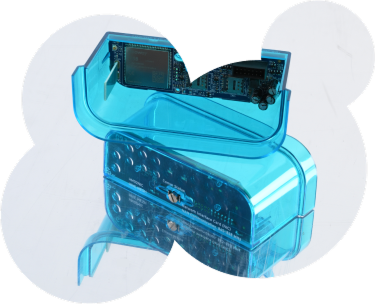
A Network Interface Card (NIC) is the communication module built into smart meters that enables the secure exchange of energy data between the meter and the utility’s communication network. Kimbal’s Network Interface Card (NIC) supports NAN RF Mesh and WAN cellular 4G communication for reliable smart meter connectivity, enhanced security and forms the backbone of Advanced Metering Infrastructure (AMI) networks.
What is RF Mesh communication in Kimbal’s smart meters and what are its benefits?
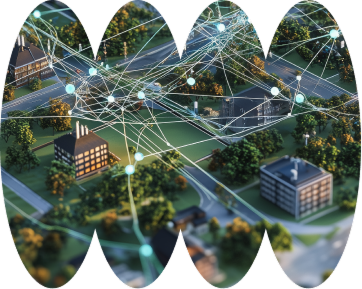
RF Mesh is a wireless communication technology where smart meters communicate with one another forming mesh network and transfer data across multiple hop nodes. Kimbal’s HIVE MESH NAN RF module uses mesh networking and dynamic routing to provide reliable and scalable communication for smart metering and AMI deployments.
What communication technologies does Kimbal’s Network Interface Card (NIC) support?
Kimbal’s Network Interface Card (NIC) supports multiple communication protocols for seamless integration across different network layers, including RF mesh networking (NAN) via the HIVE MESH module and 4G cellular communication (WAN) via the TEJAS module. This dual-layer approach lets utilities choose the right connectivity option based on site topography and coverage needs.
How does HIVE MESH improve Kimbal’s smart meter connectivity?
HIVE MESH is Kimbal’s Neighbourhood Area Network (NAN) RF communication module for smart meters. It uses mesh networking, where signals hop across multiple nodes, to deliver resilient and scalable connectivity even in harsh or obstructed topographies. It is optimized for AMI applications and provides long-range, energy-efficient, real-time monitoring and management.
What is a Neighbourhood Area Network (NAN) in smart metering?
A Neighbourhood Area Network (NAN) is the communication layer that connects smart meters within a local area and facilitates the exchange of meter data across the AMI network. RF Mesh is a commonly used NAN communication technology, and Kimbal’s HIVE MESH provides NAN RF connectivity for smart meters.
What is a Wide Area Network (WAN) in smart metering?
A Wide Area Network (WAN) provides communication between smart meters or the local AMI network and utility systems such as the Head-End System (HES). Kimbal’s TEJAS Cellular 4G Module provides WAN connectivity through cellular networks for secure and reliable smart meter data transmission.
What is the difference between NAN and WAN in smart metering?
NAN (Neighbourhood Area Network) connects smart meters to each other and to a RF mesh Gateway using short-range RF mesh communication, ideal for dense meter clusters. WAN (Wide Area Network) connects meters or data collectors directly to the utility’s central system over longer distances, typically using cellular networks. Kimbal offers both: HIVE MESH for NAN and TEJAS for WAN.
What is the TEJAS 4G Cellular Module for smart meters? What happens if 4G network coverage is unavailable?
TEJAS is Kimbal’s Wide Area Network (WAN) module for smart meters, delivering fast, secure data transfer over 4G mobile networks. It features dual-SIM auto-switching capability for uninterrupted connectivity and automatic 2G fallback for seamless operation in areas with limited 4G coverage.
What is the difference between RF Mesh and 4G cellular communication for smart meters?
RF Mesh provides local NAN connectivity by allowing smart meters to communicate through multiple network nodes using RF mesh, while 4G cellular communication provides WAN connectivity through mobile networks. Kimbal’s HIVE MESH supports NAN RF Mesh communication, while TEJAS provides cellular 4G WAN connectivity.
How does a smart meter communicate with the utility’s Head-End System (HES)?
A smart meter can communicate with the utility’s HES through different AMI communication technologies. Kimbal’s Network Interface Card enables data transmission through NAN RF Mesh using HIVE MESH or WAN cellular 4G using TEJAS, depending on the network architecture.
Is Kimbal’s Network Interface Card suitable for AMI and smart grid applications?
Yes. Kimbal’s Network Interface Card is designed for Advanced Metering Infrastructure (AMI) and smart grid applications. It enables reliable energy data transmission, real-time monitoring, secure communication, and efficient network management through RF Mesh and cellular 4G connectivity.
How does RF Mesh provide reliable smart meter connectivity in challenging terrain?
RF Mesh uses multiple communication paths between network nodes, allowing data to travel through available nodes instead of depending on a single connection. If one path is blocked or fails, HIVE MESH uses dynamic routing to automatically find an alternate path, ensuring resilient, self-healing connectivity and consistent data transfer even in dense urban or difficult terrain.
How secure is the data transmitted through Kimbal’s Network Interface Card?
Kimbal’s Network Interface Card uses advanced encryption(AES-128/AES-256, DLMS security suite, TLS) to protect energy data and maintain data integrity during communication. Both HIVE MESH and TEJAS support secure data transmission across NAN and WAN networks.
Does the Network Interface Card support real-time energy monitoring?
Yes. The Network Interface Card enables timely transmission of smart meter data for real-time energy monitoring. HIVE MESH provides efficient NAN communication, while TEJAS supports low-latency 4G cellular communication for WAN connectivity. This supports real-time grid visibility, faster outage detection, and accurate consumption tracking for utilities.
Is the Network Interface Card energy efficient?
Yes. The Network Interface Card is designed for low power consumption to complement smart meter operations. Both HIVE MESH and TEJAS are optimized to deliver long-range, energy-efficient communication suited for continuous, 24/7 grid operation.
What are the key benefits of Kimbal’s Network Interface Card?
Kimbal’s Network Interface Card provides reliable multi-technology connectivity, real-time data transmission, secure communication, low power consumption and compact, durable integration within smart meters. Its support for NAN RF Mesh and WAN cellular 4G makes it suitable for scalable AMI and smart grid deployments.
Which module should utilities or DISCOMs choose — HIVE MESH or TEJAS?
For DISCOMs and utilities rolling out dense urban or semi-urban smart metering projects, HIVE MESH (NAN) is the better fit, its mesh relaying and local network resilience suit closely clustered meter installations where nodes can hop data to each other. For standalone, rural, or geographically spread-out installations where a direct link back to the utility’s head-end system is more practical, TEJAS (WAN) is the stronger choice, using 4G cellular with 2G fallback to guarantee connectivity. Many DISCOMs deploy both together in a layered NAN + WAN architecture, using HIVE MESH to aggregate data locally and TEJAS to backhaul it to the utility control center, giving utilities a single AMI rollout strategy that adapts to varied terrain and meter density across their service area.