




Smart meters
Empowering utilities
with real-time data to optimize energy usage, enhance billing accuracy, and support a more efficient and sustainable energy grid.
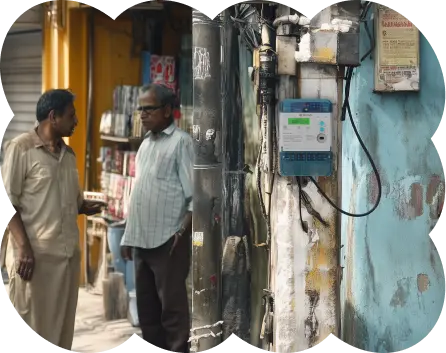
Smart Meters
Designed for
reliability

Smart Meters
Boundary meters
Kushal Boundary meters are designed to measure energy at the point where different electrical systems or networks meet, providing crucial insights for monitoring and managing energy flow between boundaries. This innovative product is currently under development, with features aimed at enhancing accuracy, reliability, and real-time data access for utilities and large-scale operations. With its advanced capabilities, the boundary meter will support efficient energy distribution and help identify energy losses across networks.
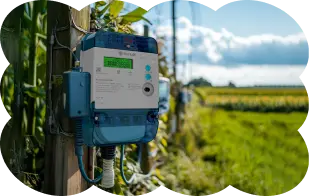
Commercial and Industrial
Kushal commercial and industrial meters (LTCT & Whole Current) are advanced devices designed to accurately measure and monitor energy consumption in high-demand environments. These meters provide critical insights into power usage, helping businesses optimize energy efficiency, manage costs, and ensure compliance with billing and regulatory requirements. Key features include load profiling, power quality analysis, tamper detection, remote communication, and real-time data access. Ideal for large-scale operations, Kushal C&I meters empower industries and commercial establishments to achieve energy efficiency and operational excellence.
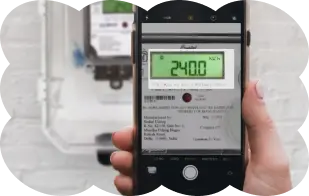
meters
Residential meters
Kushal Residential meters are essential devices designed to accurately measure and monitor electricity consumption in households. Engineered for high reliability, these meters feature robust construction, precision components, and advanced protection against environmental factors like voltage fluctuations, surges, and temperature variations. Key features include accurate billing, tamper detection, remote reading capabilities, and real-time data access. Built to meet stringent standards, residential meters support efficient energy management and seamless integration with modern smart grid systems.
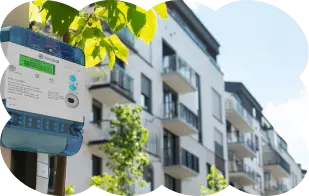
DT Meters
Kushal DT meters are advanced devices designed to measure and monitor energy parameters in distribution transformers. They play a critical role in tracking transformer efficiency, detecting energy losses, and ensuring balanced power distribution. Equipped with features like load profiling, tamper detection, remote communication, and real-time data insights, these meters also include Digital Input (DI) ports for capturing external events such as breaker status or alarms. They help optimize transformer performance, enhance system reliability, and reduce energy wastage.

Feeder meters
Kushal Feeder meters are vital for accurately measuring and monitoring energy in power distribution systems. These meters ensure efficient energy management, reduce power losses, and support maintenance. Key features include real-time data logging, remote communication, high precision, and compliance with Indian standards. They help optimize electrical systems and improve operational efficiency.
HT Consumer
Kushal HT consumer meters are designed to accurately measure and monitor energy consumption in high-tension electrical systems. These meters are essential for utilities to ensure accurate billing, efficient energy usage, and compliance with regulatory standards. Key features include high precision, tamper detection, remote communication, and real-time data tracking. Built to handle the demands of HT systems, Kushal HT consumer meters provide reliable insights into energy consumption patterns, enabling utilities to optimize energy management and support operational efficiency.

meters

Tamper Proof design

Last Gasp First Breath, Alarm/Event notification

Firmware upgrade Over the air (FOTA)

Compatible with multiple communication technologies, including RF-mesh, and Cellular

Plug & play swappable communication module

Tamper alerts to utility in real-time

Anomaly self-discovery and alerts

Multiple tariff management

Stores data to help in monitoring and analysing Quality of supply (QoS)

Power fail alerts
Tamper Proof design
Last Gasp First Breath, Alarm/Event notification
Firmware upgrade Over the air (FOTA)
Compatible with multiple communication technologies, including RF-mesh, and Cellular
Plug & play swappable communication module
Tamper alerts to utility in real-time
Anomaly self-discovery and alerts
Multiple tariff management
Stores data to help in monitoring and analysing Quality of supply (QoS)
Power fail alerts
Tamper Proof design
Last Gasp First Breath, Alarm/Event notification
Firmware upgrade Over the air (FOTA)

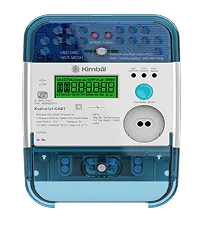
Kushal HTCT Smart Meter


Frequently Asked
Questions
What are the features of Kimbal smart meters? How are they useful for DISCOMs and consumers?
For DISCOMs, these capabilities translate into measurable operational and financial benefits. Real-time data access improves billing accuracy and reduces manual intervention, while tamper detection and continuous monitoring help identify energy theft and reduce Aggregate Technical and Commercial (AT&C) losses. Remote operations minimize field visits, lower operational costs, and improve response times. Additionally, granular consumption insights enable better load management, demand forecasting, and more informed decision-making, supporting a more efficient and resilient power distribution network.
Smart meters also have a significant impact on utility reliability metrics, particularly SAIDI (System Average Interruption Duration Index) and CAIDI (Customer Average Interruption Duration Index). The real-time, precise data on power outages and restoration times significantly improve these indices by enabling faster detection and identification of the fault location.
What are the features of Kimbal smart meters? How are they useful for DISCOMs and consumers?
For DISCOMs, these capabilities translate into measurable operational and financial benefits. Real-time data access improves billing accuracy and reduces manual intervention, while tamper detection and continuous monitoring help identify energy theft and reduce Aggregate Technical and Commercial (AT&C) losses. Remote operations minimize field visits, lower operational costs, and improve response times. Additionally, granular consumption insights enable better load management, demand forecasting, and more informed decision-making, supporting a more efficient and resilient power distribution network.
Smart meters also have a significant impact on utility reliability metrics, particularly SAIDI (System Average Interruption Duration Index) and CAIDI (Customer Average Interruption Duration Index). The real-time, precise data on power outages and restoration times significantly improve these indices by enabling faster detection and identification of the fault location.
What types of smart meters are part of Kimbal’s product portfolio?
Built with a strong focus on quality and reliability, Kimbal smart meters are IS 16444 compliant and engineered to meet stringent performance and regulatory standards in India. They are manufactured using advanced processes and strict quality protocols to ensure consistent performance at scale, with high accuracy and robust operation across diverse environmental conditions.
Features such as tamper detection, real-time monitoring, and secure communication further enhance their dependability in the field. Together, these meters enable utilities and DISCOMs to monitor energy flow across every layer of the grid, from individual consumers to network infrastructure, while ensuring accurate billing, reduced losses, and efficient grid management.
What communication options are available in Kimbal smart meters?
Kimbal offers a fully integrated Advanced Metering Infrastructure (AMI) solution built around three core components: Smart Meters, Communication Infrastructure (WAN and NAN), and Kimbal’s enterprise-grade Head-End System (HES), Vaani. Vaani collects and manages data from smart meters. It can collect meter data in three different ways:
- RF mesh: meters pass data to each other like a chain and finally to a gateway in their vicinity. This way, if one path fails, the data can take another route. This works well for densely populated metering areas and is usually lower cost.
- Cellular: the meter sends data directly using a mobile network (like an M2M SIM). This gives strong, fast, direct connectivity, but depends on network coverage and SIM/service.
- Hybrid: uses both RF mesh and cellular, so the utility can choose the best option for each location.
With reliable communication powered by Vayu Mesh and Tejas, secure data transmission, and a scalable cloud deployed HES delivering 99%+ SLA, utilities benefit from consistent performance across deployments. The system integrates seamlessly with most MDMS over standardized interfaces enabling utilities with deeper insights on load management, issue resolution, and helping data-driven decision-making to reduce losses, improve operational efficiency, and support large-scale smart metering rollouts.
What does Kimbal’s AMI solution include, and how does it benefit utilities?
How does Kimbal’s RF mesh network enable reliable smart meter communication?
KMesh enables smart metering capabilities, allowing utilities to effortlessly conduct automatic meter readings and capture interval data. It offers full control, seamless scaling to millions of meters, and cost-efficient performance with self-healing networks, redundant pathways, hop-by-hop forwarding, and strength-in-numbers resilience. Supports 400+ nodes per gateway via efficient pull-based routing (broadcast-to-link), minimizing airtime saturation, collisions, and delays, even as density doubles. Utilities get superior stability, faster delivery, and trustworthiness for their AMI, outpacing conventional stacks. Kimbal offers two varieties of gateways – Standalone Gateways (supports 400+ nodes*), and In-meter Gateways (supports ~100-150 nodes*).
The system functions by utilizing a network of radio frequency (RF) devices, commonly referred to as “nodes” that are interconnected in a mesh configuration. This mesh network allows end devices to communicate with the gateway through multiple hops as needed. Meters and other devices transmit data through nearby devices, establishing an expansive network coverage. This approach is particularly advantageous in regions with high meter population density, as it enables coverage over a wider geographical area. Mesh networks typically operate within the frequency range of 865 to 868 MHz.
*The mentioned numbers are as per controlled in-house tests.
What role do Vaani HES and MDM systems play in Kimbal’s smart metering solution?
What sets Kimbal HES apart is its dual-mode support for both Cellular and Radio Frequency (RF) smart meters, making it highly adaptable for varied deployment scenarios:
Cellular Meter Integration
- Direct, high-throughput communication over mobile networks.
- Real-time and scheduled data collection.
- Remote operations like connect/disconnect, time sync, and on demand reads.
- MQTT and REST APIs for efficient, secure data exchange.
- Supports RF mesh communication via gateways.
- Aggregates data from multiple meters through RF concentrators.
- Ensures reliable data relay even in low-connectivity areas.
- Both meter types feed into a common data pipeline.
- Apache Cassandra handles raw, high-volume data ingestion.
- PostgreSQL manages parsed, structured data and configurations.
- Integrated with MDMS via RESTful APIs using both Push and Pull mechanisms.
Together, Vaani HES and the MDM System ensure that data flows seamlessly from meters to utility platforms, transforming raw consumption data into accurate billing, actionable insights, and better operational control for utilities and DISCOMs.
How do Kimbal smart meters help reduce AT&C losses for DISCOMs in India?
Features like tamper detection and event alerts enable early identification of theft and meter bypass, while remote supply control helps enforce payment discipline and reduce revenue leakage. The elimination of manual meter reading ensures accurate, timely billing, reducing errors, and unbilled consumption.
At a network level, integration with systems like Vaani HES allows utilities to track data consistently and recover missed readings through gap reconciliation, further minimizing revenue loss. Together, these capabilities enable DISCOMs to improve billing efficiency, enhance collection rates, and systematically reduce AT&C losses.
Are Kimbal smart meters compliant with Indian standards and RDSS?
Kimbal is also an active technology partner in multiple AMI projects across the country, supporting DISCOMs with end-to-end smart metering solutions. With integrated capabilities across smart meters, communication infrastructure, and Head-End Systems, Kimbal’s solutions are designed to help utilities meet RDSS objectives such as reducing AT&C losses, improving billing efficiency, and enabling large-scale digital transformation of the power distribution network. This makes Kimbal a reliable and compliant choice for utilities undertaking RDSS-driven smart metering rollouts, having supplied over 12.5 million smart meters nationwide so far.
How do Kimbal smart meters integrate with existing utility systems?
Through Vaani, Kimbal’s Head-End System (HES), data from smart meters is securely collected over KMesh and made available in standardized formats, allowing easy exchange with downstream systems. Vaani can be quickly configured to support multi-vendor environments, ensuring compatibility with different meter types and existing infrastructure.
The system also supports customizable data parameters and integration of workflows, enabling utilities to align the solution with their specific operational and regulatory requirements. This ensures a smooth transition from legacy systems to advanced metering infrastructure without disruption, while enabling utilities to scale and modernize their operations efficiently.
What communication technologies are used in Kimbal smart meters?
The RF-based network uses KMesh, enabling multi-hop, self-healing communication between meters for consistent performance in dense or challenging areas. For wider coverage, 4G cellular (TEJAS) ensures secure and uninterrupted data transfer, with dual-SIM support and fallback options.
Both are enabled through Kimbal’s Network Interface Card (NIC), allowing seamless, real-time communication across the smart metering network.
Can Kimbal smart meters work in rural and low-connectivity areas?
In areas where RF mesh may not be feasible, cellular communication via the NIC provides an alternative, with features like dual-SIM support and fallback options to maintain connectivity.
This flexible communication approach ensures that utilities can deploy Kimbal smart meters across diverse geographies while maintaining consistent data availability and performance.
How does Kimbal ensure secure data transmission in smart metering systems?
At the system level, Vaani HES operates on a private network, is SSL-encrypted, and VAPT-certified, ensuring strong protection against unauthorized access and vulnerabilities.
Additionally, KMesh is designed for secure, bi-directional communication, enabling authenticated data exchange and command execution across the network.
Together, these measures ensure that energy data remains confidential, tamper-resistant, and reliable across the entire smart metering ecosystem.
What is Kimbal’s Meter Data Management (MDM) system and how is it useful for DISCOMs?
For DISCOMs, this ensures clean and reliable data for billing, reducing errors and disputes. The MDM system also enables data validation, estimation, and gap filling, helping recover missed readings and minimize revenue loss.
In addition, it supports advanced analytics for load profiling and demand response programs, enabling utilities to better understand consumption patterns, optimize load management, and make more informed operational decisions. This leads to improved efficiency, reduced losses, and a more responsive power distribution network.
What is Kimbal’s production capacity, can it fulfil large-scale smart meter deployment orders?
The company’s fully automated assembly lines can produce up to 40,000 smart meters per day with consistent output and minimal human intervention. Backed by lean manufacturing practices, Total Quality Management (TQM), and a strong zero-defect approach, Kimbal maintains a product defect rate of less than 0.5%, ensuring high precision, reliability, and quality at scale.
How many smart meters has Kimbal deployed across India?
Kimbal manufactures over 1 million smart meters every month at its state-of-the-art facility, enabling utilities to execute large-scale rollouts within demanding timelines. With a 99% Service Level Agreement (SLA) across its AMI ecosystem, Kimbal helps utilities deliver reliable operations, scale deployments efficiently, and achieve their smart metering objectives with confidence.