How Smart Meters Evolving into Real-Time Grid Diagnostic Tools
7th October 2026Kimbal Editorial Team
As India’s power sector becomes increasingly digital, smart meters are evolving beyond their traditional role in electricity billing. Connected metering infrastructure is creating new opportunities for real-time monitoring, power quality analysis, asset diagnostics, cybersecurity and more intelligent energy management.
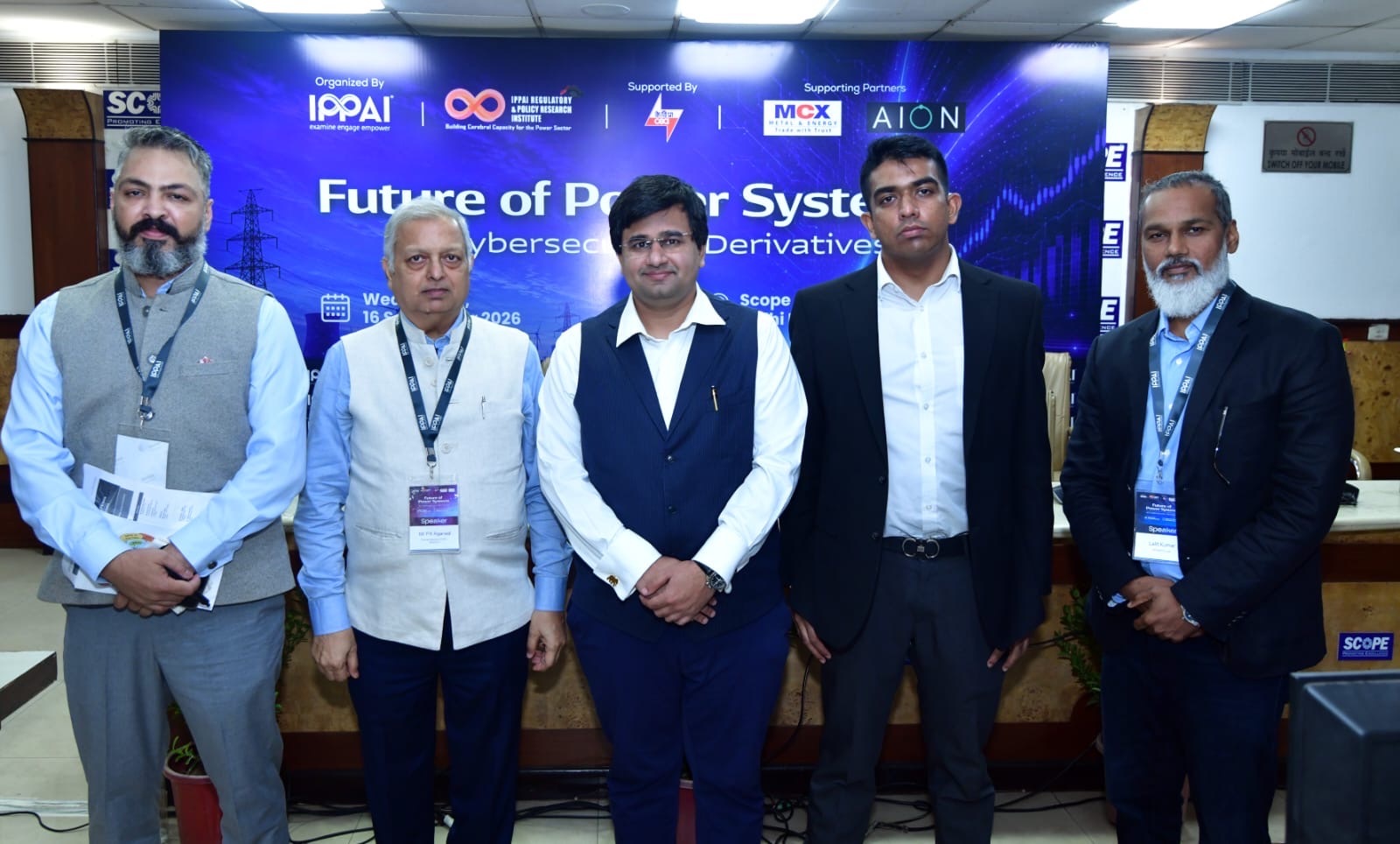
In this interview with Electrical & Power Review (EPR), Lalit Kumar, VP of Security Information & Risk at Kimbal, shares his perspective on how smart meter technology is evolving to support a more connected and responsive power system. He discusses the role of smart meters as edge-diagnostic tools, their integration with enterprise energy management platforms, the challenges of measuring bidirectional power flows from distributed energy resources, and the hardware-level cybersecurity measures needed to protect connected metering infrastructure.
The conversation also looks at how data quality, interoperability, cybersecurity and distributed energy resources are shaping the next generation of smart metering.
Interview with Lalit Kumar, VP of Security Information & Risk at Kimbal
Beyond standard billing, how are smart meters evolving into edge-diagnostic tools to deliver real-time power quality monitoring and predictive maintenance insights?
A smart meter samples voltage and current continuously, which makes a twelve-million-meter fleet like ours, spread across 23 states, a distributed diagnostic network for the grid’s most neglected layer: low-voltage distribution. The signals that matter are voltage sags and swells, phase imbalance, neutral disturbances, and last-gasp outage events, pushed over the RF mesh or cellular in real time rather than polled monthly. Aggregate them per distribution transformer, and you get a health model for DISCOM assets DISCOMs with unlimited room to improve. Overloading, imbalance, and abnormal voltage behavior surface in meter data weeks before a transformer actually fails. The real shift is architectural that decide at the edge which events deserve bandwidth.
How are smart meter architectures ensuring seamless, protocol-agnostic integration with enterprise EMS, BMS, and DCIM platforms for automated, AI-driven energy management?
Protocol-agnostic integration is achieved by being strict at the bottom of the stack, not permissive at the top. At the device layer, we standardize on DLMS/COSEM with the IS 15959 companion specification. A rigorous canonical data model at the meter is what makes everything above it flexible. Translation happens exactly once, at the head-end system: data is normalized there and published through open APIs and event streams that any EMS, BMS, or DCIM platform can subscribe to, with enterprise semantics carried through IEC 61968 CIM lines. The consuming platform never needs to speak “meter.” Two things then decide whether AI-driven energy management actually works. First, data trustworthiness: time-synchronized, quality-flagged, metadata-rich series, because models fed data of doubtful granularity produce confident nonsense. Second, security: every integration point is an attack surface, so each API is authenticated, least-privileged and monitored. An EMS integration that can read an entire fleet must never be able to reach into it. Openness at the top; discipline at the bottom.
“Once rooftop solar, storage and EV chargers sit behind smart meters, they become a settlement point.”
– Lalit Kumar, VP of Security Information & Risk at Kimbal
As C&I facilities deploy solar, storage and EVs, how are meters adapting to measure rapid, complex, bidirectional power flows accurately?
Once rooftop solar, storage, and EV chargers sit behind smart meters, they become a settlement point. Three adaptations matter. Four-quadrant measurement becomes the default: active and reactive energy, import and export, resolved per phase, because distributed resources load the three phases of an LV network unevenly. Accuracy under distortion: inverters and EV chargers are non-linear loads that inject harmonics, and a meter that holds its accuracy class on a clean sine wave can drift on real waveforms, so metrology now assumes distortion as the operating condition rather than the exception. And granularity: India’s AMI specifications already require 15-minute interval data, which is what makes time-of-day tariffs and net-metering settlement workable, and the direction of travel is finer still. The overlooked piece is timestamp integrity.
What specific hardware-level cybersecurity frameworks and communication protocols are critical to protect connected meters against cyber threats and physical tampering?
Meters live 10-15 years in the field, therefore, crypto-agility is a design requirement today. With that, the non-negotiables are unique per-device credentials, secure boot, and cryptographically signed firmware. On the wire, DLMS/COSEM security suites provide AES-GCM authenticated encryption, so commands are verified, not merely hidden. Physical tampering: cover-open, magnetic interference, and reverse current should be treated as telemetry, streamed and correlated centrally with cyber events rather than logged locally. Of course, IEC 62443 gives us the maturity ladder for that path; and now Can this rewritten as: “India has added regulatory teeth: CEA cybersecurity regulations, notified in 2026 and in force from April 2027.” India has added regulatory oversight.
About the Interview
The interview explores how digital technologies are expanding the role of smart meters across the energy ecosystem, from grid diagnostics and distributed energy integration to interoperability and cybersecurity.
The Kimbal Editorial Team focuses on smart metering, Advanced Metering Infrastructure (AMI), energy transition, and power sector advancements in India and beyond. This team of experts ensures thorough primary and secondary research to track developments and advancements in the smart metering ecosystem. Working closely with engineers, industry stakeholders, and leadership teams, the editorial team delivers accurate, insightful, and industry-relevant content for utilities, policymakers, businesses, and electricity consumers.