
Advanced Meters Explained: Benefits & How They Work
Published on 16 November 2026


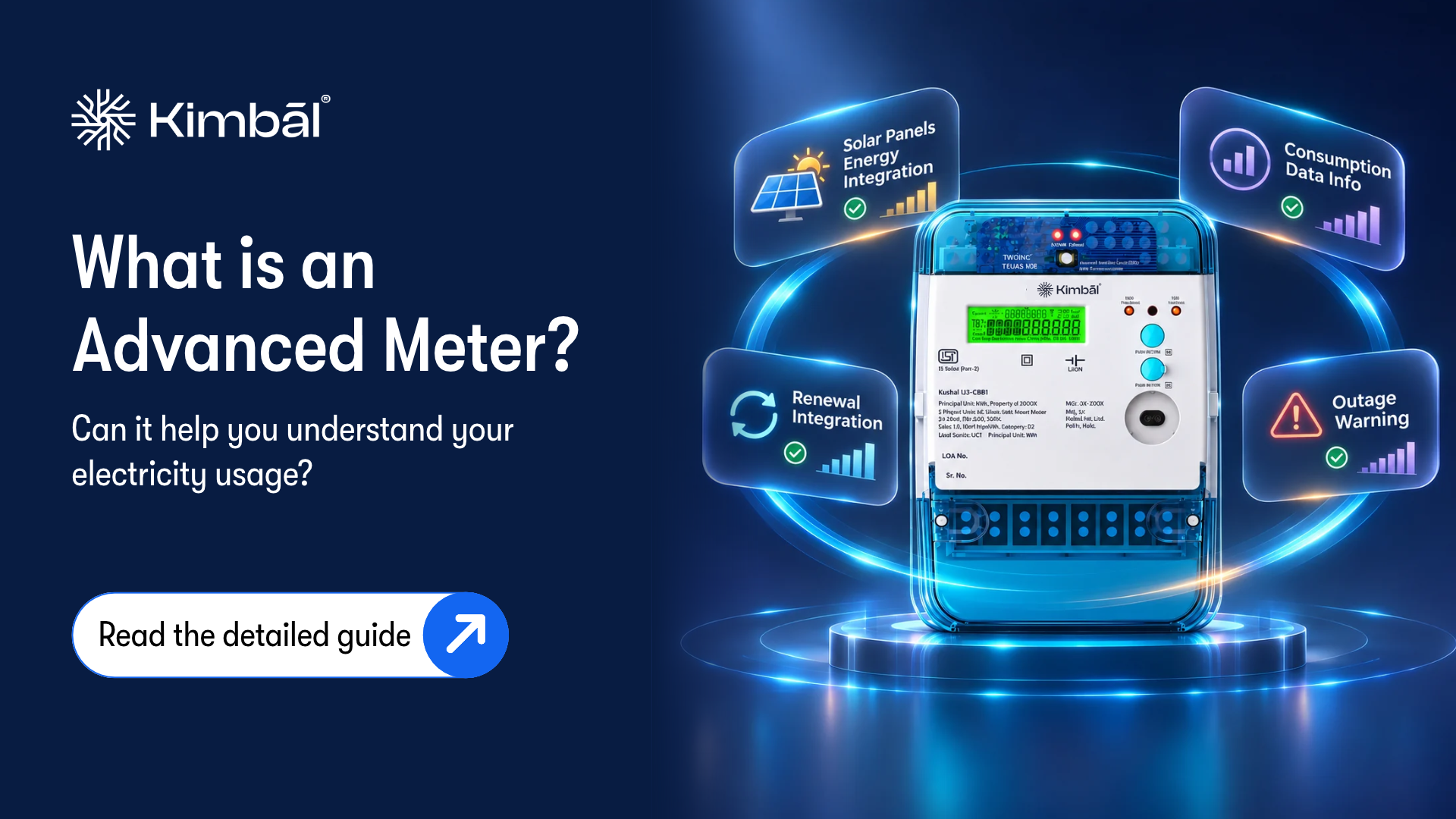
Advanced meters are digital electricity meters that measure electricity consumption and support the electronic exchange of meter data between consumers and electricity distribution companies. They can record consumption at regular intervals, communicate readings remotely, and support features such as consumption monitoring, automated billing and prepaid electricity services. In India, advanced metering is commonly associated with smart meters and Advanced Metering Infrastructure (AMI), which connects electricity meters with communication networks and utility management systems.
Electricity plays an important role in our everyday lives, from powering household appliances to supporting businesses and essential services. As electricity consumption grows, the way we measure and manage energy is evolving too. Advanced meters are an important part of this change.
These meters help electricity consumers track their consumption, access more frequent usage information and manage electricity expenses. They also help distribution companies improve billing, monitor electricity distribution and strengthen the power network. But what exactly are advanced meters? How do they work, and how can they make a difference to your electricity usage? Let’s understand.
Advanced meters are digital electricity meters that measure and record the amount of electricity a consumer uses. They also support communication between the meter and the electricity provider (DISCOM). Traditional electronic meters measure electricity consumption and display the reading on the meter. Advanced meters add communication and data management capabilities to this process. For consumers, this means better access to electricity consumption information, more frequent meter readings and convenient services through digital platforms.
In India, smart meters represent a key application of advanced metering technology. The government is promoting their deployment through initiatives such as the Revamped Distribution Sector Scheme (RDSS), which aims to improve the efficiency and financial sustainability of electricity distribution companies.
Read more: Revamped Distribution Sector Scheme (RDSS): State-wise Update and Key Highlights 2026
Advanced meters combine digital measurement, communication technology and data management to support electricity monitoring. Here is how the process works:
Step 1: Measure electricity consumption
The meter measures the electricity entering a home, office or commercial establishment. It records consumption in kilowatt-hours (kWh), commonly known as units of electricity.
For example, if an appliance with a power rating of 1,000 watts runs for one hour, it consumes 1 kWh or one unit of electricity.
Read more: What is a “Unit” in Electricity? Meaning, kWh Calculation & Electricity Bill Guide
Step 2: Record consumption data and communicate it to the utility
Advanced meters record electricity usage at regular intervals. Depending on the meter configuration and utility requirements, they can capture consumption patterns across different times of the day. The meter sends consumption data to the electricity distribution company through communication technologies.
Step 3: Process the data through utility systems
The electricity provider receives and processes meter data through systems, which helps utilities manage meter information, monitor consumption patterns, support billing and improve distribution network operations.
Step 4: Share consumption information with consumers
Depending on the services offered by the electricity provider, consumers can access their electricity usage through mobile applications, web portals or other digital platforms. These platforms may offer consumption graphs, billing details, payment facilities, prepaid balance information and usage alerts.
Advanced Metering Infrastructure (AMI) is the technology ecosystem that connects advanced electricity meters with utility systems. Think of AMI as a communication network that allows meters, electricity distribution companies and consumers to exchange information. An AMI ecosystem generally includes four key components:
Together, these components create a connected metering ecosystem that helps utilities manage electricity distribution more efficiently.
Learn more: Kimbal’s End-to-end Advanced Metering Infrastructure Solutions
Advanced meters can make electricity consumption easier to understand and manage. Here are the key benefits for consumers.
Yes. Many electricity distribution companies offer mobile applications that connect consumers with their smart meter information. Depending on the DISCOM and the services available, these applications may allow consumers to:
These features give consumers easier access to electricity-related information and help them make informed decisions about their consumption. Consumers can check their respective DISCOM’s website or mobile application for available services.
Read more: Smart Meter Myths vs Facts: What Electricity Consumers Need to Know
India’s power distribution sector is undergoing a significant technology upgrade, with smart metering forming an important part of this transition. The Government of India launched the Revamped Distribution Sector Scheme (RDSS) in July 2021 to improve the operational efficiency and financial sustainability of distribution utilities.
The scheme includes smart metering of consumers, distribution transformers and feeders, along with infrastructure upgrades across the distribution network. As per the data released by the Ministry of Power, smart metering under RDSS covers 19.79 crore consumers, 52.53 lakh distribution transformers and 2.05 lakh feeders. As of 31 December 2025, 3.90 crore smart meters had been installed under RDSS, while the total number of smart meters installed across India under various schemes stood at 5.28 crore.
The initiative aims to strengthen electricity distribution through improved energy accounting, consumption monitoring, billing efficiency and better utility operations. For consumers, this transition supports better access to electricity usage information and digital services.
The installation of an advanced or smart meter forms part of the electricity distribution company’s metering upgrade programme. Here are a few things consumers should keep in mind:
Read more: Smart Meter Installation Process in India: Complete Guide 2026
Advanced meters are helping bring greater visibility, communication and digital convenience to electricity consumption and distribution. For consumers, they provide access to more frequent consumption information, convenient billing and payment services, and better tools to understand electricity usage. For distribution companies, they support improved metering, energy accounting and network management. As India continues to strengthen its electricity distribution infrastructure through initiatives such as RDSS, advanced metering will play an important role in building a more connected and efficient power ecosystem.
Understanding how these meters work can help electricity consumers make better-informed decisions about their energy usage.
What is an advanced electricity meter?
Advanced meters are digital electricity meters that measure and record electricity consumption and communicate meter data to electricity distribution companies. They support remote meter reading, consumption monitoring, automated billing and, depending on the system, prepaid electricity services. In India, they are commonly deployed as part of Advanced Metering Infrastructure (AMI).
Is an advanced meter the same as a smart meter?
In the context of India’s electricity distribution upgrades, advanced metering commonly refers to smart metering technology. A smart meter forms part of an Advanced Metering Infrastructure (AMI) ecosystem that connects meters, communication networks and utility systems.
How do advanced meters measure electricity consumption?
Advanced meters measure electricity consumption in kilowatt-hours (kWh). One kWh represents one unit of electricity. The meter records usage data at configured intervals and communicates it to the utility through an available communication network.
Read more: 1 Unit Electricity Cost in India (2026): State-Wise Tariff & Bill Calculation Guide
Do advanced meters provide real-time electricity usage information?
Advanced meters can support near-real-time consumption visibility through connected mobile applications and utility platforms. The frequency of updates depends on the meter, communication network and services offered by the electricity provider.
What is the difference between a smart meter and AMI?
A smart meter is the digital electricity meter that records consumption and communicates data. AMI is the complete infrastructure that connects smart meters with communication networks, Head-End Systems and Meter Data Management Systems.
Read more: Smart Meters in India Explained: Benefits, Prepaid Model, and RDSS Guide (2026)
Can advanced meters support prepaid electricity?
Yes. Prepaid smart meters allow consumers to recharge their electricity balance through supported payment channels. They can also provide balance information and low-balance alerts, depending on the DISCOM’s services.
Read more: How to Recharge Your Smart Meter Online and Offline in India (2026 Guide)
Can advanced meters support rooftop solar?
Yes. Advanced metering can support net metering applications, which measure electricity imported from and exported to the grid by rooftop solar consumers. The meter configuration must meet the applicable DISCOM and regulatory requirements.
What is RDSS and how does it relate to smart meters?
The Revamped Distribution Sector Scheme (RDSS) is a Government of India initiative launched in July 2021 to improve the operational efficiency and financial sustainability of electricity distribution utilities. Smart metering of consumers, distribution transformers and feeders forms a key part of the scheme.
Published on 16 November 2026
Published on 6 November 2026
Published on 6 November 2026
Your email address will not be published. Required fields are marked *