
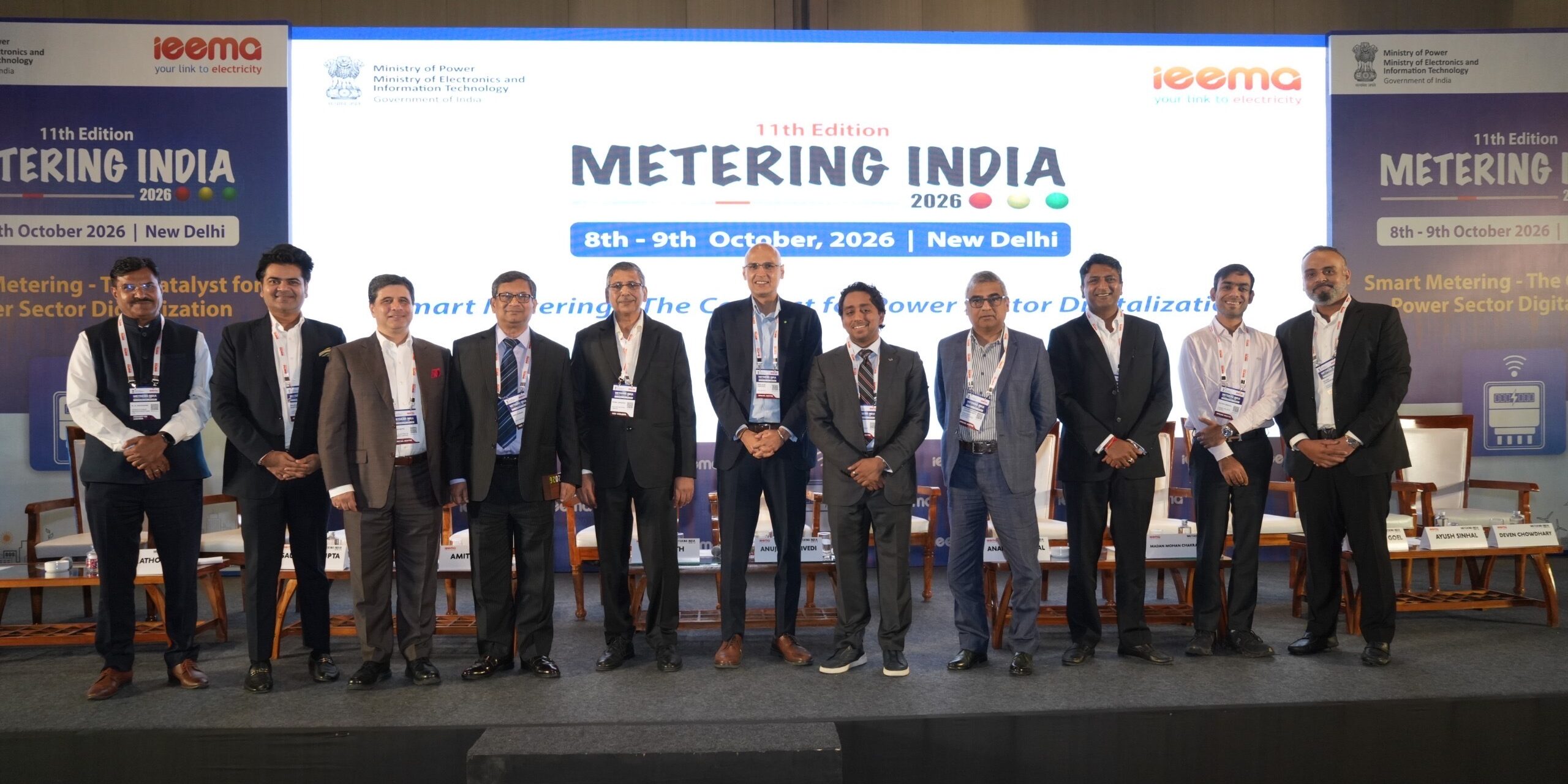
Kimbal Participates in Metering India 2026, Highlighting the Need to Strengthen India’s Smart Metering Ecosystem
Published on 13 October 2026




RDSS is a Government of India scheme launched in July 2021 to modernise India’s power distribution system. It promotes smart meters, distribution infrastructure upgrades, AT&C loss reduction and better DISCOM efficiency. The scheme has a target of 25 crore smart meters and an implementation deadline of March 2028.
The Revamped Distribution Sector Scheme (RDSS) is a Government of India initiative launched in July 2021 to modernise India’s electricity distribution sector. The scheme focuses on reducing Aggregate Technical and Commercial (AT&C) losses, improving billing and collection efficiency, strengthening distribution infrastructure, and improving the operational performance of electricity distribution companies (DISCOMs).
Smart metering is a major component of RDSS, but the scheme goes beyond smart meter installation. It also supports upgrades to feeders, substations, distribution transformers and other critical distribution infrastructure.
As implementation progresses across states, RDSS is helping build a more efficient, reliable, transparent and digitally connected electricity distribution network.
This guide covers the latest RDSS status, state-wise smart meter installation, the role of smart meters, consumer and DISCOM benefits, implementation challenges, rooftop solar integration and the roadmap through 2028.
Source: RDSS MIS Dashboard Report, Ministry of Power, Government of India, as of August 2026.
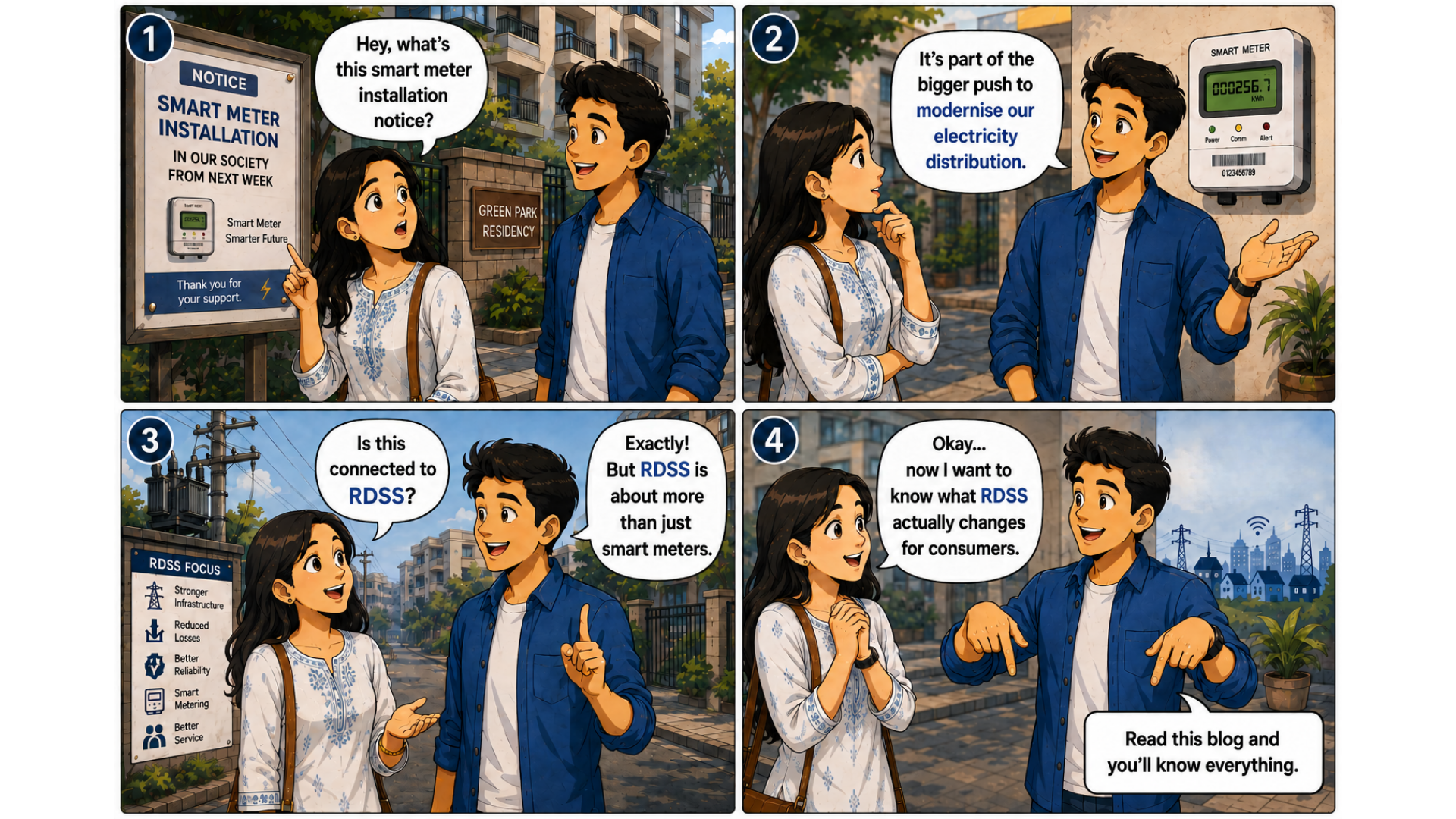
The Revamped Distribution Sector Scheme (RDSS) is a Government of India programme designed to modernise India’s electricity distribution system and improve the efficiency and financial health of DISCOMs. Launched in July 2021, RDSS addresses challenges such as high AT&C losses, inefficient billing and collection, ageing distribution infrastructure and limited visibility into electricity consumption. The scheme combines smart metering, digital technologies and infrastructure upgrades to improve how electricity is measured, distributed and managed. Key areas covered by RDSS include:
In simple terms, RDSS aims to create a more reliable, efficient and digitally connected power distribution system.
RDSS was introduced to address long-standing challenges in India’s electricity distribution sector, including high distribution losses, inefficient billing, ageing infrastructure and limited digital visibility.
Before RDSS, many DISCOMs depended on manual meter reading and legacy systems. These processes could contribute to billing delays, estimated bills, higher operational costs and difficulty in identifying electricity theft and network issues.
At the same time, ageing feeders, transformers and other distribution infrastructure required modernisation to meet India’s growing electricity demand. RDSS addresses these challenges by combining physical infrastructure upgrades with smart metering and digital technologies.
The RDSS smart meter scheme refers to the large-scale deployment of smart meters under RDSS to modernise electricity metering and improve the efficiency of power distribution. Smart meters automatically measure electricity consumption and transmit consumption data to the DISCOM at regular intervals. This reduces dependence on routine manual meter reading and provides utilities with more timely consumption information.
For consumers, smart meters can support:
For DISCOMs, smart meters provide data that can support:
Smart meters are therefore an important part of RDSS, but they work alongside broader distribution infrastructure and digital systems.
Smart meters support RDSS by providing timely electricity consumption data that helps DISCOMs improve billing, monitor the distribution network and manage electricity demand more effectively.
Traditional meter reading provides limited and periodic visibility into consumption. Smart metering creates a more continuous flow of digital consumption information. This information can help DISCOMs:
For consumers, this can result in greater billing transparency, better access to usage information and improved electricity services.
RDSS helps DISCOMs improve operational and financial efficiency through better metering, stronger distribution infrastructure and digital monitoring. Smart meters reduce dependence on manual meter reading, while upgraded distribution infrastructure improves network performance. RDSS can help DISCOMs improve:
RDSS reduces AT&C losses by improving metering, strengthening distribution infrastructure, and making billing, collection and network monitoring more effective.
AT&C losses include both:
RDSS addresses these losses through:
Reducing AT&C losses helps DISCOMs improve their financial and operational performance while supporting a more efficient electricity distribution network.
RDSS can benefit consumers through more transparent billing, greater visibility into electricity usage, convenient digital services and improvements in distribution reliability. The exact services available depend on the consumer’s DISCOM.
RDSS strengthens India’s power grid by combining smart metering with upgrades to feeders, substations, distribution transformers and digital monitoring systems. Smart meters provide better visibility into electricity consumption, while infrastructure upgrades improve the physical distribution network. Together, these technologies can help DISCOMs:
The result is a more connected, responsive and data-driven distribution network.
RDSS supports rooftop solar by promoting smart metering infrastructure that can accurately measure electricity flowing both from the grid to consumers and from rooftop solar systems back to the grid. This two-way measurement is important for net metering. A smart meter can separately record:
The DISCOM can use these readings to calculate applicable electricity charges and energy credits according to the net-metering rules applicable in that state or DISCOM.
As rooftop solar adoption grows, this two-way visibility can also help utilities understand changing electricity flows across their distribution networks.
Smart meter deployment under RDSS varies significantly across states because implementation depends on project timelines, infrastructure readiness, utility requirements and execution progress. The following table shows the smart meters installed under RDSS across states and union territories based on the RDSS MIS data used for this update.
RDSS · Nationwide Rollout
Tap or click any state to see its installed meter count
Loading map…
| State/UT | Smart Meters Installed |
| Andhra Pradesh | 34,05,227 |
| Arunachal Pradesh | 90,150 |
| Assam | 56,88,228 |
| Bihar | 23,26,533 |
| Chhattisgarh | 43,32,238 |
| Goa | 35,943 |
| Gujarat | 60,81,591 |
| Himachal Pradesh | 9,97,826 |
| Jammu & Kashmir | 10,69,125 |
| Jharkhand | 8,04,670 |
| Kerala | 1,98,218 |
| Madhya Pradesh | 41,35,940 |
| Maharashtra | 1,33,94,639 |
| Manipur | 71,295 |
| Mizoram | 78,848 |
| Nagaland | 57,625 |
| Puducherry | 1,34,149 |
| Punjab | 20,211 |
| Rajasthan | 52,22,536 |
| Sikkim | 1,05,883 |
| Tamil Nadu | 9,746 |
| Tripura | 3,19,835 |
| Uttarakhand | 6,76,838 |
| Uttar Pradesh | 1,00,67,892 |
| West Bengal | 7,11,193 |
| Total (All India) | 6,00,36,379 |
Source: RDSS MIS Dashboard, Ministry of Power, Government of India. Data as of August 2026.
Maharashtra, Uttar Pradesh, Assam, Rajasthan, Gujarat and Madhya Pradesh are among the states with the highest smart meter installation figures in the current RDSS state-wise data.
Maharashtra leads the state-wise table with more than 1.33 crore installed smart meters, followed by Uttar Pradesh with more than 1 crore. Assam, Gujarat, Rajasthan and Madhya Pradesh have also recorded significant deployment.
However, the number of installed meters alone does not indicate overall RDSS performance. Progress also depends on sanctioned projects, infrastructure upgrades, project timelines and the stage of implementation in each state.
The main challenges in RDSS implementation include consumer awareness, communication connectivity, installation timelines, legacy systems and workforce training.
The national RDSS target includes the installation of 25 crore smart meters across India, alongside modernisation of the electricity distribution network. Under the scheme, 20.33 crore smart meters have been sanctioned across states, while over 6 crore had been installed as of August 2026 according to the RDSS data used in this guide.
RDSS also focuses on infrastructure such as feeders, substations and distribution transformers to improve the overall performance of the distribution network.
The current RDSS implementation deadline is March 2028. The extension gives DISCOMs additional time to complete sanctioned smart metering and distribution infrastructure projects across states. As implementation continues, the focus will remain on expanding smart meter deployment, strengthening distribution infrastructure, improving digital monitoring and using data to improve network management.
The next phase of RDSS will focus on expanding smart metering, completing distribution infrastructure upgrades and making greater use of digital data to manage India’s electricity network. Key areas include:
RDSS is more than a nationwide smart meter rollout. It is a long-term programme to modernise India’s electricity distribution system through smart metering, stronger infrastructure and digital technologies.
For consumers, this can mean more transparent billing, greater visibility into electricity usage, convenient digital services and improved service reliability.
For DISCOMs, better data and stronger infrastructure can support lower losses, improved operational efficiency, better network planning and stronger financial performance.
With implementation continuing through March 2028, RDSS is helping lay the foundation for a more reliable, efficient, transparent and digitally connected power distribution network in India.
What is the RDSS scheme?
The Revamped Distribution Sector Scheme (RDSS) was launched in July 2021 by the Ministry of Power with an outlay of ₹3 lakh crore. It focuses on smart metering, reducing power distribution losses, upgrading distribution infrastructure, improving DISCOM efficiency, and ensuring reliable electricity supply.
Why was RDSS introduced?
It was introduced to fix long-standing issues in India’s power distribution system — manual meter readings, delayed and inaccurate billing, power theft, ageing infrastructure, and high maintenance costs by combining infrastructure upgrades with digital technology.
Is RDSS only about smart meters?
No. While smart meters are the most visible part of RDSS, the scheme also funds upgrades to substations, feeders, distribution transformers, and other infrastructure critical to reliable power supply.
What is a DISCOM?
A DISCOM (electricity Distribution Company) is the utility responsible for supplying and billing electricity to consumers in a state or region. DISCOMs are the implementing agencies for RDSS at the state level.
What is a smart meter?
A smart meter measures electricity consumption and automatically transmits that data to DISCOM at regular intervals, eliminating the need for manual meter readings.
What are the benefits of smart meters for consumers?
More accurate bills, greater visibility into usage through apps or portals, digital bill payment and prepaid recharge, and faster resolution of billing disputes.
What are the benefits of smart meters for DISCOMs?
Automatic meter reading, improved billing and collection efficiency, faster detection of theft or tampering, near real-time network monitoring, and lower operational costs.
What is AT&C loss, and how does RDSS address it?
AT&C (Aggregate Technical and Commercial) loss reflects both the electricity lost in the network and the revenue DISCOMs fail to recover. RDSS targets this through better metering, infrastructure upgrades, and stronger billing and collection systems.
When was RDSS launched, and what is its budget?
RDSS was launched in July 2021 with a total budget of ₹3.03 lakh crore, targeting twenty-five crore smart meter installations across 28 states and union territories.
What is the current progress of RDSS (as of 2026)?
Smart-meter deployment is progressing at different rates across states. As of 4 August 2026, 6,00,36,379 smart meters had been installed under RDSS out of the 20.33 crore sanctioned (approximately 29.5%), based on the RDSS MIS report.
Which states are leading the RDSS smart meter rollout?
States like Maharashtra, Uttar Pradesh, Assam, Bihar, Madhya Pradesh, and Rajasthan are among the leading states by the smart-meter installation figures shown in the state-wise table.
Which states are lagging in RDSS implementation?
The pace of implementation varies significantly across states, with some states reporting much lower installation figures than the leading states shown in the state-wise table.
How does RDSS funding flow work?
Funding flows from the central government to state DISCOMs, which use it for infrastructure upgrades and smart meter installation, enabling automatic meter reading and improved billing for consumers.
How do smart meters support rooftop solar and net metering?
Unlike conventional meters, smart meters measure electricity flow in both directions what a household imports from the grid and what it exports from rooftop solar making accurate net metering and billing credits possible.
What challenges has RDSS faced?
Key challenges include low consumer awareness about smart meters and prepaid billing, weak communication-network connectivity in rural and hilly areas, slow installation in some states due to tender or contract delays, legacy billing systems that are hard to integrate, and gaps in staff training.
What is the RDSS implementation deadline?
The Government of India has extended the RDSS implementation timeline to March 2028, giving DISCOMs more time to complete sanctioned projects.
How does RDSS help detect power theft?
Smart meters and digital monitoring give DISCOMs near real-time consumption data, making it easier to identify meter tampering, unauthorised connections, and unpaid bills.
Does RDSS improve outage response times?
Yes. Digital metering and monitoring help utilities detect outages and faults faster, allowing quicker response and restoration of power supply.
What role does data play in the future of RDSS?
Smart meter data helps DISCOMs forecast demand, detect unusual consumption patterns, identify potential theft, and plan infrastructure upgrades more effectively as the rollout matures.
What can consumers expect as RDSS continues through 2028?
More accurate billing, greater transparency into usage, expanded digital services (bill payment, prepaid recharge), faster complaint resolution, and better support for rooftop solar and net metering.
Published on 13 October 2026
Published on 7 October 2026
Published on 6 October 2026
Your email address will not be published. Required fields are marked *