
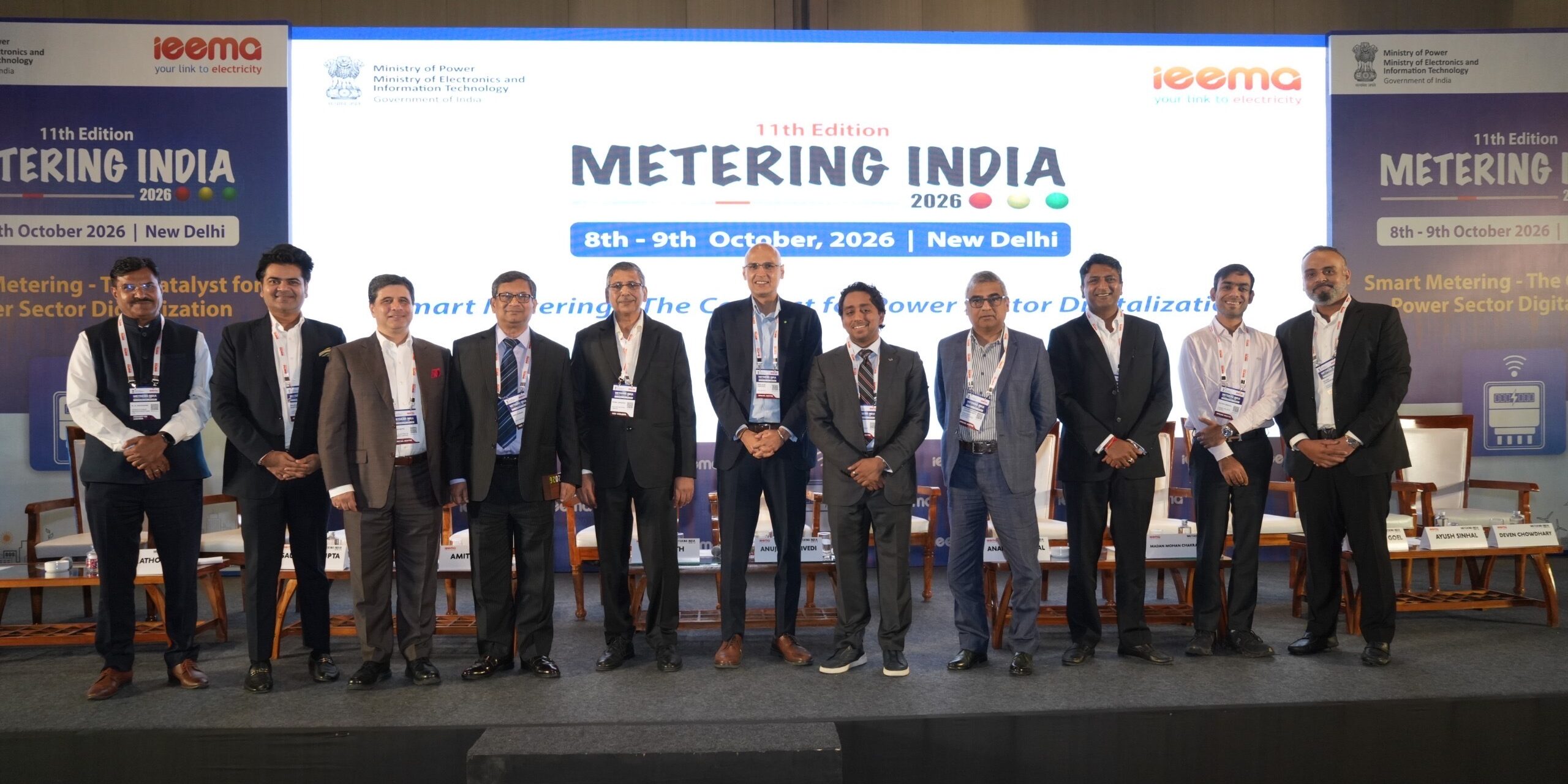
Kimbal Participates in Metering India 2026, Highlighting the Need to Strengthen India’s Smart Metering Ecosystem
Published on 13 October 2026




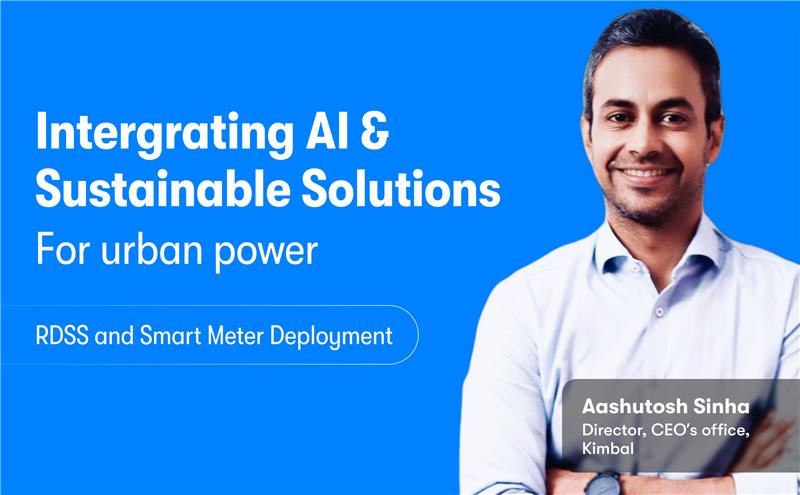
India’s journey toward a net-zero future is often discussed through long-term targets and policy milestones. But the real test of this transition lies much closer to home, in the way electricity is generated, distributed, and consumed across rapidly growing cities. As urban demand rises, power systems are under increasing pressure to deliver reliability, efficiency, and sustainability at the same time.
This formed the core of the discussion at the recent expert session hosted by EPR Magazine, where Aashutosh Sinha, Director – CEO’s office, Kimbal, shared insights on how AI-led solutions, smart metering, and policy-backed reforms are redefining urban power systems in India.
The discussion focused on four key areas critical to the future of urban power systems:
From national ambition to urban reality
India’s Panchamrit goals outline a clear direction for the country’s energy transition. These include achieving 500 GW of non-fossil energy capacity by 2030, meeting 50% of energy requirements from renewables, reducing carbon intensity by 45%, and reaching net-zero emissions by 2070.

Cities are where electricity demand is most concentrated and where inefficiencies in distribution have the greatest financial and environmental impact. Low-carbon development is therefore not an abstract goal; it requires modernizing electricity systems, strengthening urban infrastructure, and improving how energy flows through cities on a daily basis.
RDSS: Building the foundation for smarter distribution
A key enabler of this transition is the Revamped Distribution Sector Scheme (RDSS), launched with a total outlay of over ₹3 lakh crore. The scheme aims to reduce AT&C losses to 12–15%, eliminate the ACS–ARR gap, and place DISCOMs on a more sustainable financial footing.
Beyond financial metrics, RDSS is accelerating structural reform through large-scale smart metering and public–private partnership models. These interventions are creating the digital foundation needed for real-time visibility, transparent billing, and data-driven decision-making, capabilities that are essential for integrating renewable energy and managing growing urban demand.
Smart metering: Turning efficiency into measurable impact
Smart metering has already begun delivering tangible results across the country. Between FY21 and FY25, improvements in distribution efficiency contributed to a steady decline in AT&C losses, helping avoid hundreds of billions of rupees in annual financial losses while also reducing millions of tonnes of CO₂ emissions.

For consumers, smart meters bring greater transparency and awareness of energy usage. For utilities, they unlock operational efficiencies that were previously difficult to achieve at scale. At Kimbal, smart metering is viewed not as a standalone solution, but as a core digital layer of the modern distribution grid, enabling remote operations, accurate measurement, and scalable systems designed to support expanding urban networks and millions of consumer endpoints.
Enabling prosumers and a more participatory grid
As rooftop solar adoption grows, the traditional one-way flow of electricity is evolving into a more dynamic, two-way system. Smart meters play a critical role in enabling net metering and supporting the rise of prosumers – consumers who both use and generate electricity.
States implementing net-metering frameworks have already recorded significant cumulative energy exports from rooftop solar installations, signaling a shift toward decentralized and participatory energy systems. When consumers can see, understand, and manage their consumption, sustainability becomes a shared outcome rather than a distant policy objective.
AI: Shaping the Next Phase of Urban Power
Looking ahead, AI will define the next phase of grid modernization. From demand forecasting and power procurement optimization to power quality monitoring and predictive maintenance, AI-driven systems can help utilities move from reactive operations to proactive planning.

For Kimbal, the convergence of AI, smart metering, and digital grid intelligence represents the future of urban power. As urban electricity demand continues to grow over the coming decade, embedding intelligence across the distribution value chain will be essential to build power systems that are not only cleaner, but also more resilient, responsive, and future-ready.
Published on 13 October 2026

Published on 7 October 2026
Published on 6 October 2026
Your email address will not be published. Required fields are marked *