
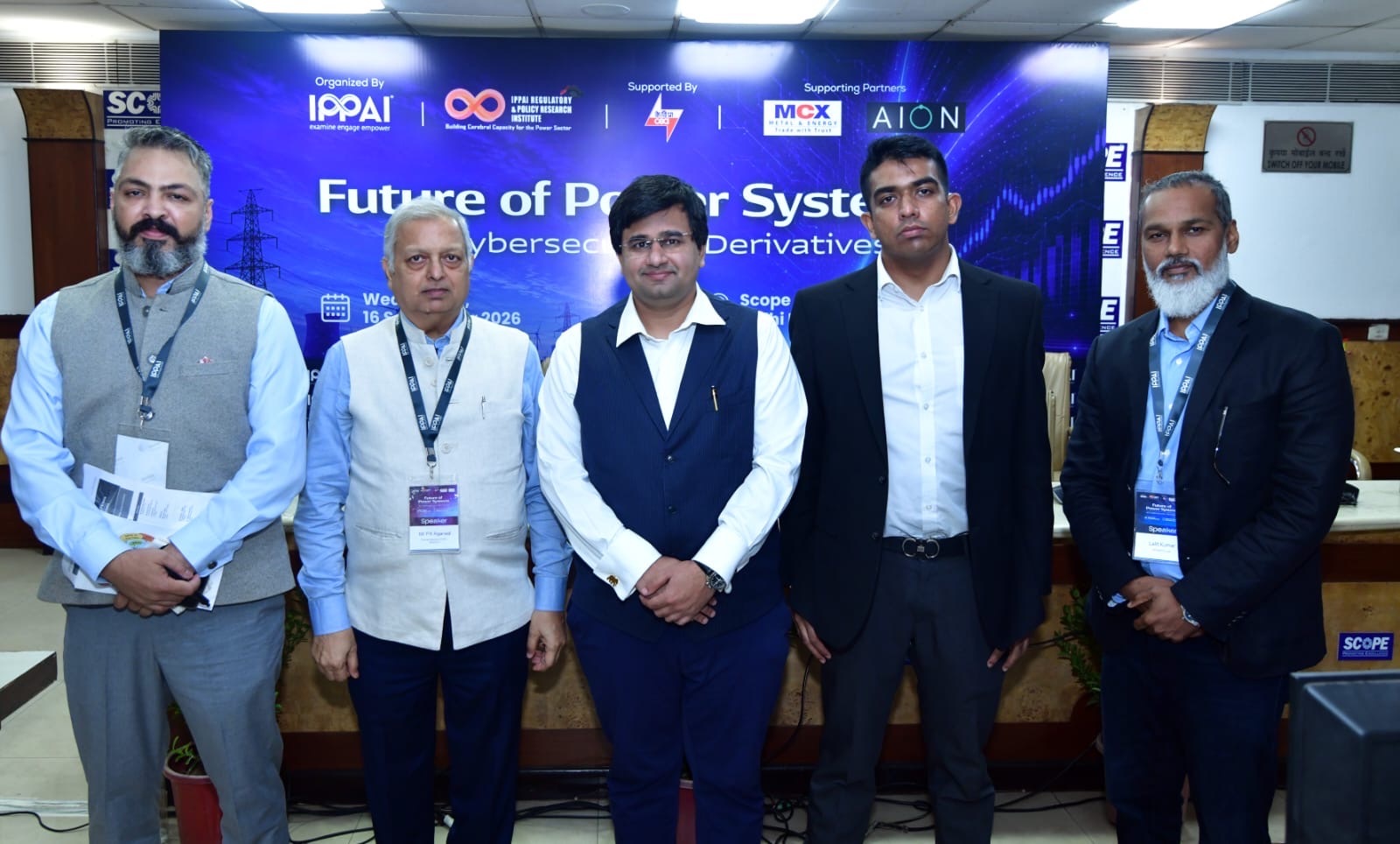
Kimbal Participates in IPPAI’s Future of Power Systems Conference
Published on 22 September 2026


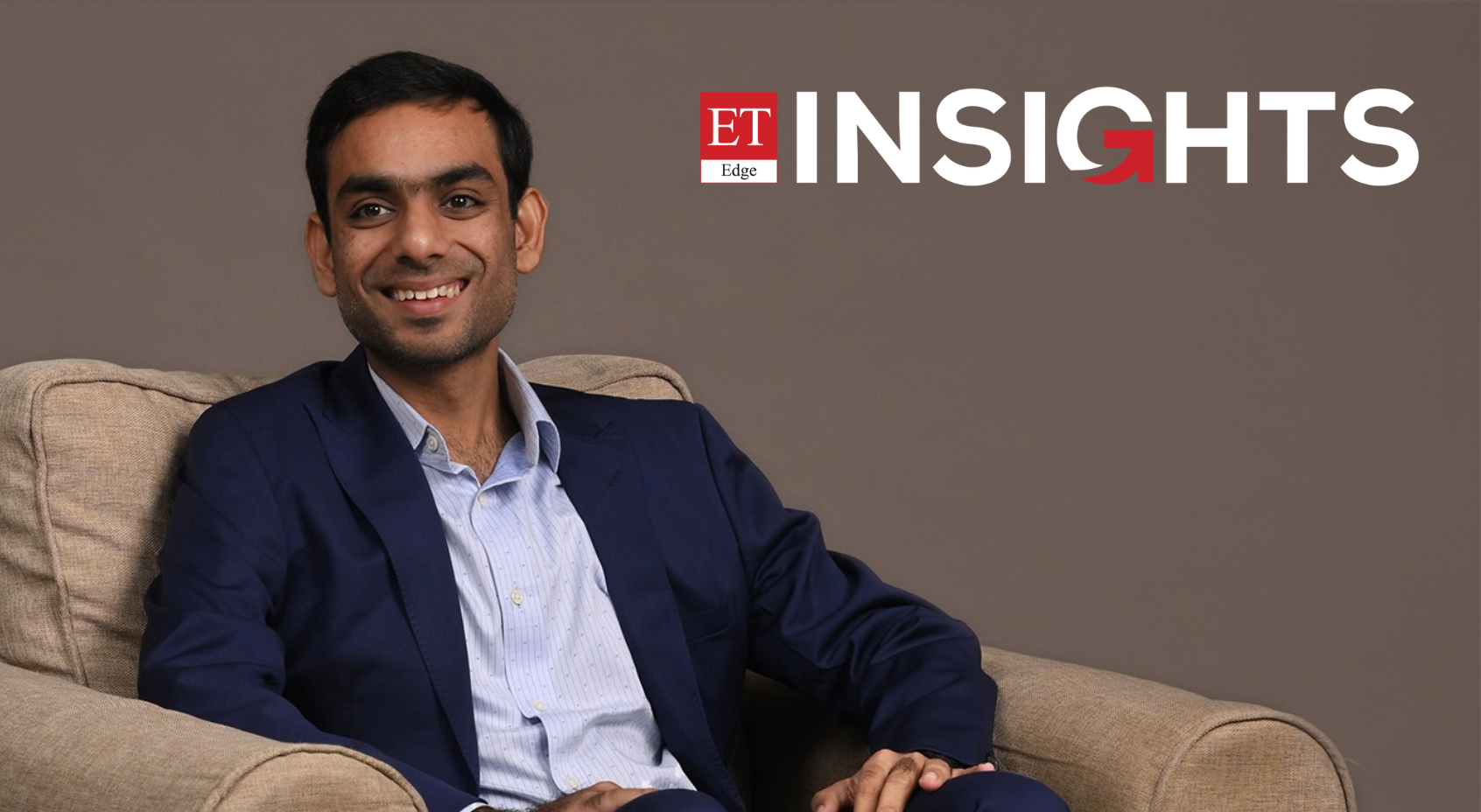
Kimbal is pleased to share that Ayush Sinhal, Founder & CEO, Kimbal, has been featured in the August 2026 edition of ET Edge Insights Magazine in an in-depth conversation titled “When the Grid Learns to Think.”
The interview explores how the energy transition is changing the way electricity grids operate and why utilities need to move beyond conventional metering towards intelligent, connected and responsive energy infrastructure.
In the conversation, Ayush discusses Kimbal’s evolution from a meter manufacturer into a technology-led energy solutions company, the changing role of Advanced Metering Infrastructure (AMI), the importance of consumer participation, distributed intelligence, cybersecurity and the long-term opportunities emerging across energy management, storage and power quality.
A key idea running through the conversation is the changing role of AMI. As Ayush puts it: “The real transformation begins when utilities stop treating AMI as a billing system and start treating it as the digital nervous system of the grid.”
The full Q&A from the feature is reproduced below.
Kimbal has evolved from Sinhal Udyog into a technology-led energy solutions company. What were the most important strategic decisions behind this transformation, and how did you balance legacy strengths with the need to build new capabilities?
The Paris Agreement in 2015 set off a new era in our sector, what we now call the energy transition, and it has changed the fundamentals of how the grid works. The grid is the largest interconnected machine ever built, and it loves predictability; it runs on a fine equilibrium of demand and supply. Frequency is its blood pressure. The moment demand exceeds supply, frequency drops, and the health of the whole system is at risk.
The energy transition disturbs that equilibrium from both sides. On the supply side, India’s renewable capacity is now close to 290 GW, roughly half of our installed base, with solar alone above 160 GW, and solar cannot be predicted beyond a point. On the demand side, consumers are putting up rooftop solar, batteries, and electric vehicles. The consumer has become a producer, ‘a prosumer,’ and life for everyone who runs the grid has become genuinely complicated.
At Kimbal, we saw this as a massive opportunity: build the products and platforms that modernize and digitize the grid so that sustainable energy can actually come onto it. That was the first strategic decision: to stop thinking of ourselves as a meter manufacturer and start building for the energy transition.
The second decision followed from it. Smart meters are the sensors of the grid, and we realized they would have to carry far more weight from merely measuring energy to orchestrating it behind the meter. So we invested in a platform that puts intelligence at the edge, and we built a global engineering team across Delhi, Bengaluru, Singapore, Seoul, Indonesia and Australia to create that deep technology in-house.
Today we are investing in smart metering for India and for the world. We chose Australia as our first global market because it leads the energy transition; its households added over 12 GWh of behind-the-meter batteries in the first year of its national battery program alone; no market in the world is adding them faster. And we have incubated three new verticals: power quality, energy storage, and energy management to serve the transition end-to-end. Forty per cent of our investment today goes into these new businesses.
On legacy, we are a young company, fifteen years in existence, so the word sits heavily on me. But if Kimbal has a legacy, it is customer obsession and service for life. That is the bedrock every new vertical stands on. Our strength has always been that we are an integrated player, hardware to software, doing whatever it takes to solve the customer’s problem, and we understand manufacturing at massive scale, which we are now transitioning into a truly automated dark factory. Those strengths are exactly what the energy transition demands.
India’s smart metering program is central to improving billing efficiency, reducing distribution losses, and enabling more responsive power systems. Where do you see the biggest execution gaps today, and what must utilities and technology providers do differently to address them?
India has made tremendous progress in scaling smart meter deployments. The technology has matured considerably; the next phase is less about technology and more about execution.
The biggest gap I see is the end consumer. This is a massive national program, and the consumer is barely aware of it, let alone participating in it. Every smart meter today ships with a consumer mobile app, yet engagement on those apps is extremely low. Until consumers participate, see their consumption, respond to it, and act on it, the true value of this program will not come out.
What must change is the lens. We have to start designing every functionality from the customer’s perspective, not the utility’s. The app should become the front door of the consumer’s relationship with electricity. Be it recharges, consumption insights, outage information, tariff signals. Utilities and technology providers have to build this together, because an engaged consumer is what converts smart metering from a billing upgrade into a grid transformation. That is where Kimbal, and the industry, should be investing next.
Kimbal combines smart meters, communication infrastructure, and AI-enabled data platforms. Why is this integrated model becoming critical for utilities, and how does it create more value than deploying meters as standalone devices?
A smart meter, by itself, is simply a periodic data collection device. It creates no value on its own. The value emerges only when it becomes part of an integrated digital ecosystem.
I learned this the hard way. Over the past two decades, I have watched projects fail or underperform because three or four partners came together to solve one problem. And it is not a one-time coming together; these assets stay on the wall for more than ten years. It is a marriage that has to last that long. In one of our first projects, we had a European integrator, a Korean solution provider and Kimbal as the meter supplier. Implementation took twenty-four months, and every customer change or performance enhancement was a nightmare of getting all parties to sit together and agree. That is when we realized: to move fast, deploy fast, and truly serve the customer, we had to own the end-to-end system. Today, among more than forty players in India, Kimbal is in the top three, and integrated execution and service is a big part of why.
Utilities today need far more than accurate billing. They need visibility across the network, real-time operational intelligence, predictive maintenance and remote management, and that is only possible when the meter, the communication network, the head-end systems, the data platforms and the AI applications function as one connected architecture.
The industry is now moving from connected devices to distributed intelligence, and we have built for it. Kimbal Edge Intelligence, our virtual execution environment co-developed with MicroEJ, turns every meter into a programmable edge node. New applications can be deployed over the air through the meter’s life, without touching the certified metrology. That shift, from devices that report to devices that decide, will define the next generation of utility operations.
Advanced Metering Infrastructure generates vast volumes of real-time data. How can utilities move beyond billing and use this intelligence to reduce losses, improve grid planning, strengthen demand forecasting, and enhance customer service?
Kimbal alone processes more than 400 GB of data from field devices every day, and this will exceed 1 terabyte per day within a year. The power sitting in that data is phenomenal, and as an industry, we have barely scratched the surface.
AMI creates one of the richest operational datasets available to a utility. Interval data lets you pinpoint losses down to an individual transformer. You can run every transformer as its own cost centre, with its own P&L. You can monitor loading, detect voltage imbalances and predict equipment failures before they interrupt supply. The same data sharpens demand forecasting, supports renewable integration and tells you where the next rupee of network investment should go.
For consumers, the same intelligence enables personalized energy insights, faster complaint resolution, better outage management and time-of-day tariffs that reward smarter consumption.
The real transformation begins when utilities stop treating AMI as a billing system and start treating it as the digital nervous system of the grid.
Smart energy infrastructure is increasingly exposed to cybersecurity, data privacy and interoperability risks. How is Kimbal addressing these challenges, and does India currently have adequate safeguards?
Smart meters are critical infrastructure. When millions of connected devices can orchestrate energy, an adversary no longer needs bombs or bullets to inflict damage; crippling the grid causes comparable pain because energy is entangled that deeply in our lives. Securing these devices is not a feature; it is our responsibility.
Two shifts make this urgent. First is AI: vulnerabilities can now be discovered and exploited far faster than ever before. Second, quantum computing. The public-key cryptography that secures today’s grid communications will not survive a sufficiently powerful quantum computer, and adversaries are already harvesting encrypted data today to decrypt it tomorrow. A meter we install today will still be on the wall well into the 2040s, squarely inside the quantum window. That is why Kimbal is investing in post-quantum cryptography now, and we intend to lead the industry’s migration to it.
On India’s safeguards: the framework has strengthened meaningfully with mandatory certification, testing in accredited Indian laboratories, and dedicated cybersecurity requirements for the power sector. But compliance is a floor, not a ceiling. The threat evolves every day, and our safeguards have to evolve faster.
What have you learned about managing large, complex public-sector projects?
That they are partnerships, not projects. Success depends on aligning utilities, regulators, implementation partners, field teams and consumers around a shared objective, and holding that alignment for years, not quarters.
Three lessons stand out. First, disciplined execution, transparent communication and long-term accountability are non-negotiable; the moment any of them slips, trust erodes faster than it was built. Second, the contract does not end at installation; it begins there. Lifecycle support, software upgrades, cybersecurity and continuous innovation over the asset’s life decide success far more than the initial deployment does. And third, public programs move in waves. You need the capacity to surge when the program accelerates, and the patience and balance sheet to absorb the pauses. Companies that plan only for the surge do not last.
What must business leaders reset first: operating model, capital allocation, talent strategy or organisational culture?
It is genuinely hard to pick one, but for me it starts with people. Everything a company does is formed by them. Get the best people, and trust them completely.
Then culture: a culture where people can fail fast, and passionate people feel safe trying. Add continuous learning, rapid decision-making and genuine cross-functional collaboration, and the operating model largely takes care of itself. At Kimbal, we run engineering as one organization across all our global centers, and we hold ourselves to a simple standard: engineering excellence matched with agility and AI adoption, in an operating model that keeps adapting to the customer.
And as a company grows, prudent capital allocation determines its long-term fate. Talent builds the company, culture multiplies it, and capital allocation determines whether it endures.
Ten years from now, what would success genuinely look like, and what uncomfortable decision may Kimbal need to take today?
Success to us would be that we are contributing to the energy transition of more than a hundred countries, enabling abundant, low-cost, reliable, and sustainable energy for all. It looks like a grid where we are no longer just measuring energy but ensuring renewables are integrated sustainably, reliability is achieved, and the grid runs autonomously; no human should be required to distribute energy. We have not inherited this earth; we have borrowed it from our children, and the grid we hand back must be worthy of them.
The uncomfortable decision? We are already taking it, every quarter. Forty per cent of our investment goes into businesses that will not pay back for years, at the cost of near-term profit. And we walk away from revenue that is only about selling hardware at the lowest price. That pricing game is a race to the bottom with no floor, and we have no interest in competing there. The edge, the intelligence, the platform – that is where we win. Choosing the long term will look uncomfortable in every short term. We will keep choosing it.
The energy transition is a once-in-a-lifetime opportunity, and Kimbal intends to lead it. The only variable is time.
We thank ET Edge Insights for featuring Ayush Sinhal and Kimbal in its August 2026 edition and for providing a platform to share our perspective on the future of intelligent energy.
Published on 22 September 2026
Published on 16 September 2026
Published on 15 September 2026
Your email address will not be published. Required fields are marked *