
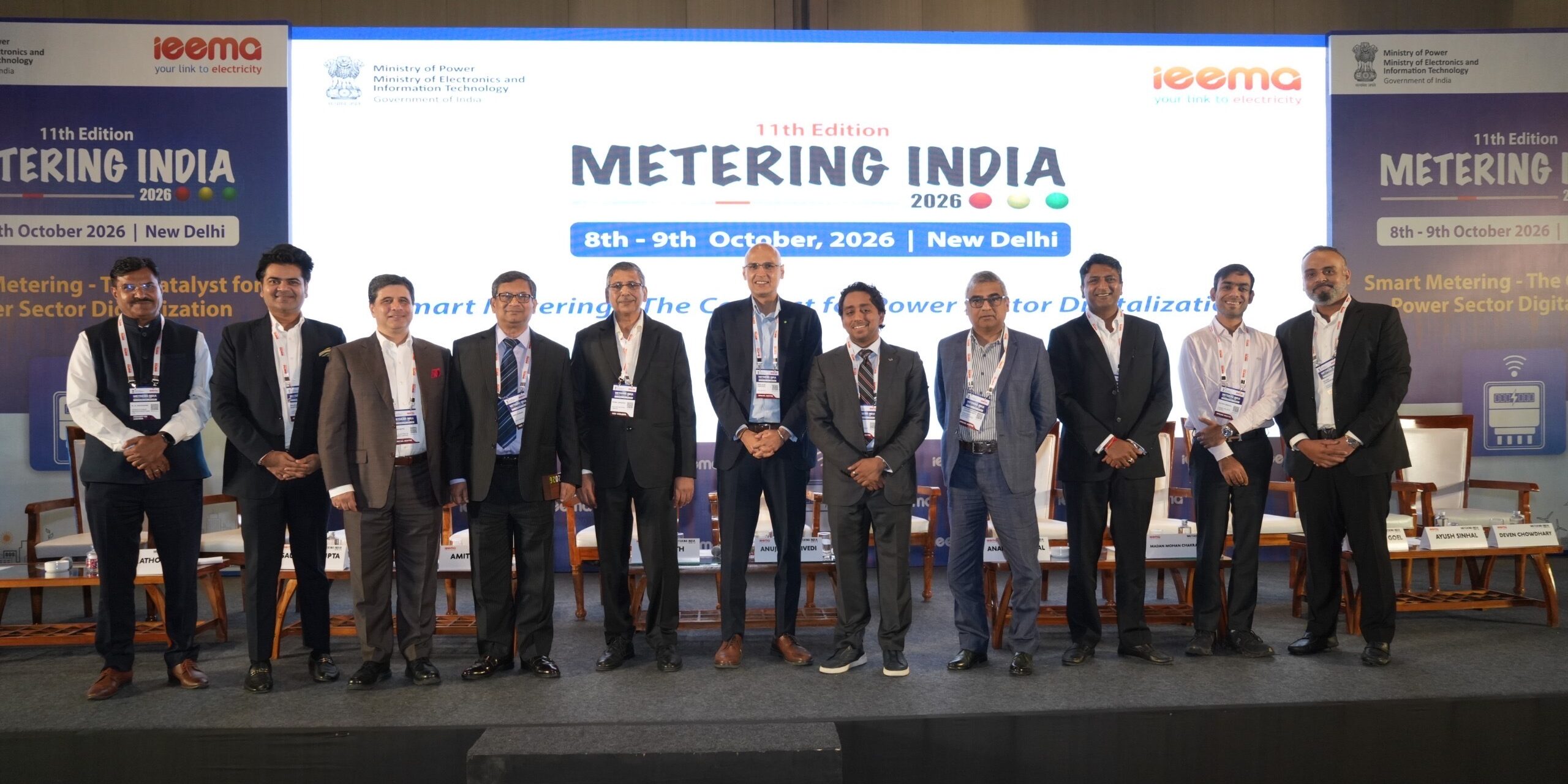
Kimbal Participates in Metering India 2026, Highlighting the Need to Strengthen India’s Smart Metering Ecosystem
Published on 13 October 2026




Smart metering companies in India design, manufacture, test, and support the smart electricity meters used by power distribution companies across the country. They ensure that smart meters meet Indian standards such as IS 16444 Part 1 and IS 13779, helping utilities deliver accurate billing, reliable communication, and better energy management. Manufacturers like Kimbal also provide Advanced Metering Infrastructure (AMI) solutions that support India's transition to a smarter electricity network.
Smart metering companies in India design, manufacture, and test the smart electricity meters that power the country’s modern electricity network. While your electricity distribution company installs the meter at your home or business, the quality, accuracy, and reliability of that meter depend on the manufacturer behind it.
As India upgrades millions of electricity connections under the Revamped Distribution Sector Scheme (RDSS), smart meters have become an important part of everyday life. They help utilities deliver more accurate billing, faster service, and better energy management. For consumers, they offer greater visibility into electricity usage and reduce the need for manual meter reading.
If you’re searching for smart metering companies in India, here’s what you need to know.
In this guide, you’ll learn what smart metering companies do, why the manufacturer matters, how to identify a reliable smart meter manufacturer, the government standards every smart meter should meet, and how Indian manufacturers like Kimbal contribute to building a smarter and more efficient power sector.
Whether you’ve recently received a smart meter or simply want to understand the technology better, this guide answers the most common questions in simple language.
Smart metering is a modern way of measuring electricity consumption using digital meters that can securely record and communicate usage data to your electricity provider.
Unlike traditional meters, smart meters do much more than display consumption. They automatically record electricity usage at regular intervals and send this information through a secure communication network. This helps utilities manage electricity distribution more efficiently while giving consumers a clearer picture of how they use electricity.
Learn more: Smart Meter vs Traditional Meter: Key Differences Explained (2026 Guide)
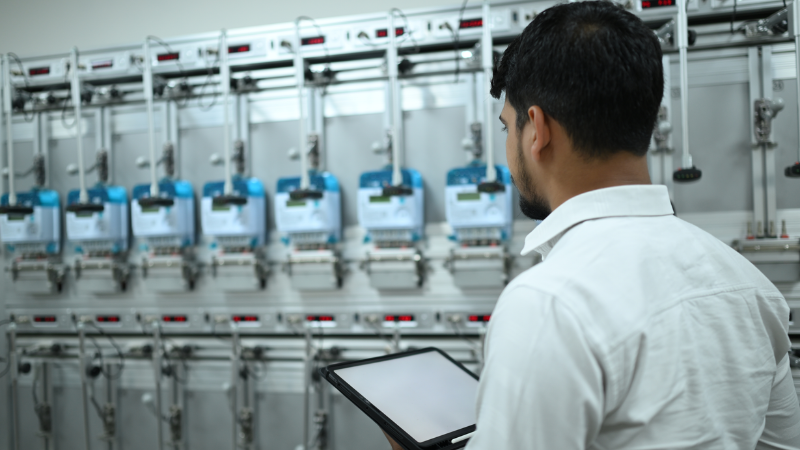
Think of a smart meter as a fitness tracker for your home. A fitness tracker records your steps, heart rate, and daily activity without you having to write anything down. In the same way, a smart meter records your electricity usage throughout the day and securely shares that information with your electricity provider. This continuous flow of information helps everyone make better decisions.
For consumers, it means,
Learn more: What is Smart Meter Reading? How It Works, Benefits & AMI Explained (2026 Guide)
For electricity utilities, it means,
Smart metering is not just about replacing an old meter. It is about creating a smarter electricity ecosystem where information moves as efficiently as electricity itself.
Learn more: Smart Meters in India Explained: Benefits, Prepaid Model, and RDSS Guide (2026)
India’s electricity demand continues to grow every year. New homes, industries, electric vehicles, and digital lifestyles require a stronger and more intelligent power infrastructure.
Traditional electricity meters served consumers for many years, but today’s electricity network needs faster access to information and better visibility into energy consumption.
This is where smart metering plays an important role. The Government of India is encouraging the deployment of smart meters through the Revamped Distribution Sector Scheme (RDSS). The initiative aims to modernise the country’s electricity distribution network and improve the overall consumer experience.
Smart meters support this transformation by helping utilities,
For consumers, these improvements translate into a more reliable and transparent electricity experience.
Learn more: Smart Grid vs Traditional Grid: Key Differences, Benefits & the Future of Electricity
When people hear the term “smart metering company,” they often imagine a company that simply manufactures electricity meters. In reality, smart metering companies do much more.
A smart meter combines precision electronics, communication technology, software, cybersecurity, and manufacturing expertise. Bringing all these elements together requires years of engineering and strict quality control. A smart metering company typically handles several important responsibilities.

Engineers design the hardware and software that allow the meter to accurately measure electricity while operating reliably in different environmental conditions. The design process also considers durability, safety, communication capability, and future software updates.
Once the design is complete, manufacturers produce smart meters in advanced manufacturing facilities using specialised production processes. Every component must meet strict quality requirements before it becomes part of the final product.
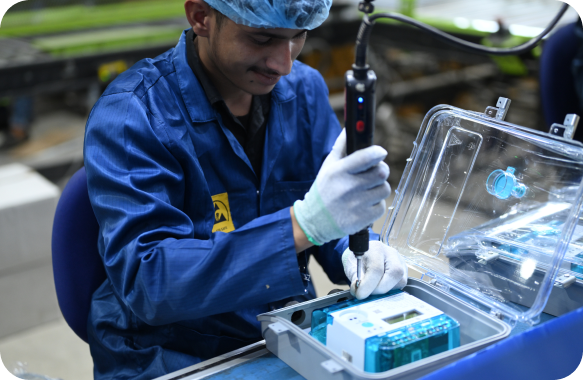
Before a smart meter leaves the manufacturing plant, it undergoes multiple tests to ensure that it measures electricity correctly. These tests verify that every meter performs within the accuracy limits specified by Indian standards. Just like a weighing scale should display the correct weight before it reaches a shop, a smart meter should accurately measure electricity before it reaches a consumer.
Reliable manufacturers ensure their products comply with the applicable Indian standards, including,
These standards help ensure that smart meters deliver consistent performance and reliable measurement.
A smart meter is much more than a digital display. It communicates with the utility using secure communication technologies such as RF Mesh or cellular networks, depending on the utility’s deployment. This allows meter readings to reach the utility automatically without requiring manual visits.
Smart metering companies also develop supporting technologies that help utilities manage millions of connected meters. These includes,
Together, these technologies create a complete Advanced Metering Infrastructure (AMI), enabling utilities to monitor and manage their smart meter networks efficiently.
Many consumers never think about who manufactured the smart meter installed at their premises. After all, the electricity distribution company installs the meter, not the consumer. However, the manufacturer plays an important role in determining how well that smart meter performs throughout its life. Although every certified smart meter follows the same government standards, the manufacturer’s expertise influences the overall quality of the product. A reliable manufacturer focuses on,
For consumers, this means greater confidence in the technology installed at their homes or businesses.
Learn more: How to Recharge Your Smart Meter Online and Offline in India (2026 Guide)
Most consumers do not choose the company that manufactures their smart meter. Electricity distribution companies select manufacturers based on technical requirements, compliance standards, and project specifications.
Even so, understanding what makes a reliable smart meter manufacturer helps you appreciate the technology installed at your home or business. It also helps you recognize the quality standards that support accurate billing and dependable performance.
Here are a few things that every reliable smart meter manufacturer should offer.
A smart meter should meet the standards prescribed for electricity meters in India. Look for manufacturers whose products comply with the following standards,
These standards ensure that smart meters meet defined requirements for performance, safety, and accuracy. Compliance with these standards gives electricity utilities and consumers, confidence that the meter has undergone rigorous evaluation before deployment.
The Bureau of Indian Standards (BIS) plays an important role in maintaining product quality across industries. A manufacturer that follows BIS requirements demonstrates its commitment to producing products that meet nationally accepted quality benchmarks. For consumers, this means greater confidence in the smart meter installed at their premises.
Manufacturing millions of smart meters requires far more than an assembly line. Reliable manufacturers invest in,
These capabilities help maintain consistent quality across every meter produced.
Every smart meter should undergo multiple quality checks before leaving the factory. These tests verify,
Smart meter manufacturers follow a similar philosophy. Every test helps ensure that the meter performs reliably after installation.
A smart meter continuously exchanges information with the electricity utility. Reliable manufacturers design their communication systems to ensure that this information travels securely and reaches the utility accurately. Depending on the project, smart meters may communicate using technologies such as RF Mesh or cellular networks.
Manufacturers with experience supporting large utility projects often have stronger systems for production, testing, logistics, and after-sales support. Their experience helps utilities deploy smart metering projects more efficiently while maintaining consistent product quality.
Today’s smart meter is part of a much larger digital ecosystem. Many leading manufacturers also develop technologies such as,
Together, these technologies help utilities manage millions of smart meters efficiently.
| What to Look For | Why It Matters |
| Compliance with IS 16444 Part 1 | Ensures the smart meter meets Indian standards for functionality, communication, accuracy, and safety. |
| Compliance with IS 13779 | Confirms the meter meets the requirements for accurate electricity measurement and reliable performance. |
| BIS compliance | Demonstrates that the manufacturer follows nationally recognised quality standards. |
| NABL-accredited testing | Ensures the smart meter undergoes rigorous testing in accredited laboratories before deployment. |
| Advanced manufacturing facilities | Supports consistent quality, precision, and large-scale production. |
| Strong quality control | Every meter undergoes multiple inspections and tests before reaching consumers. |
| Secure communication technology | Enables reliable and secure transfer of meter data using technologies such as RF Mesh or cellular networks. |
| Large-scale deployment experience | Shows that the manufacturer has experience supporting utility projects across different regions and operating conditions. |
| End-to-end AMI solutions | Manufacturers that also provide communication networks, Head-End Systems (HES), and Meter Data Management solutions can offer better integration and long-term support. |
| Innovation and product development | Continuous innovation helps manufacturers improve performance, security, and future readiness. |
| Customer and utility support | Ongoing technical support ensures smooth deployment, maintenance, and software updates throughout the meter’s lifecycle. |
One of the most common questions consumers ask is,
“How do I know my smart meter measures electricity correctly?”
The answer lies in the rigorous testing and quality assurance processes followed before the meter reaches your premises. Every smart meter undergoes multiple stages of inspection and testing during manufacturing. These processes help ensure that every unit delivers reliable and accurate measurements throughout its service life.
Accuracy begins long before manufacturing starts. Engineers design smart meters to meet strict technical specifications. They evaluate the hardware, software, and communication systems under different operating conditions to ensure dependable performance.
Calibration ensures that the smart meter measures electricity within the accuracy limits specified by Indian standards. Specialized equipment compares the meter’s readings against highly accurate reference instruments. If required, engineers fine-tune the meter so that it performs within the prescribed limits.
Before dispatch, manufacturers perform comprehensive factory tests that verify:
Each test confirms that the meter functions correctly before installation.
Quality teams inspect components and finished products at different stages of manufacturing. These inspections help identify and correct any issues before the meter reaches the field.
Manufacturers also conduct tests to demonstrate compliance with applicable Indian standards. Only after successfully completing these evaluations does the meter become ready for deployment. Together, these processes help ensure that consumers receive a smart meter capable of delivering accurate and dependable electricity measurements for years.
Many consumers notice certification markings on their smart meter but are not sure what they mean. These standards are important because they help ensure that smart meters deliver accurate measurements, operate safely, and perform reliably under different conditions. Let’s understand the most important ones,
IS 16444 Part 1 specifies the technical requirements for smart electricity meters used in India. The standard covers several important aspects, including,
When a smart meter complies with IS 16444 Part 1, it means the product has been designed and evaluated according to nationally recognized technical requirements.
IS 13779 defines the requirements for AC static watt-hour meters. The standard focuses on accurate energy measurement, performance, construction, testing, and reliability. It forms an important foundation for ensuring consistent measurement across electricity meters used in India.
The Bureau of Indian Standards develops and maintains quality standards for products across various industries. Compliance with BIS requirements demonstrates that the manufacturer follows recognized quality practices and meets applicable technical specifications. For consumers, BIS compliance provides additional confidence in the product installed at their premises.
Many leading manufacturers use NABL-accredited laboratories for testing and validation.
The National Accreditation Board for Testing and Calibration Laboratories (NABL) assesses laboratories against internationally accepted quality requirements. Testing in an NABL-accredited laboratory helps ensure that results are accurate, reliable, and consistent. Although consumers rarely see these testing processes, they form an important part of building trust in every smart meter installed across the country.
India’s transition to smart metering depends on manufacturers that combine engineering expertise, advanced manufacturing, and a strong focus on quality.
Kimbal is one of the Indian companies contributing to this transformation through the design and manufacture of smart metering solutions.
The company develops smart electricity meters and Advanced Metering Infrastructure (AMI) solutions that help utilities modernise their electricity distribution networks while delivering better experience for consumers. Kimbal’s smart meters comply with IS 16444 Part 1 and IS 13779, reflecting the company’s commitment to quality, safety, and accurate energy measurement. Every smart meter undergoes rigorous testing before deployment, supported by NABL-accredited testing facilities that help verify performance and reliability.
Beyond manufacturing smart meters, Kimbal provides an integrated AMI ecosystem that includes:
With over 12 million AMI endpoints integrated across India, Kimbal supports utilities in building a smarter, more connected, and digitally enabled electricity network.
While consumers may never directly choose the manufacturer of their smart meter, companies like Kimbal play an important role behind the scenes by building products that help deliver accurate billing, reliable performance, and a more efficient electricity ecosystem for everyone.
If you’ve recently received a smart meter, you might be curious about who manufactured it. The good news is that you don’t need to open the meter or contact your electricity provider to find out. Most smart meters display important information on the front panel. Here’s what you can look for.
The manufacturer’s name or logo usually appears on the front of the meter. This helps identify the company that designed and manufactured the device.
Every smart meter has a model number that identifies the specific product. Utilities use this information for installation, maintenance, and support.
Each smart meter carries a unique serial number. Think of it as the meter’s fingerprint. It helps utilities identify and track the meter throughout its lifecycle.
You may also notice certification markings or standard references printed on the meter. These indicate that the product has been designed and tested according to applicable Indian standards.
The digital display shows readings such as energy consumption, meter status, and other operational information. Most smart meters allow you to scroll through different readings using the display button. If you’re unsure about any information shown on the meter, your electricity distribution company can help explain the display and its functions.
Learn more: How to Read Your Smart Meter Display: 2026 Guide for electricity consumers in India
As smart meters become more common, many questions and misconceptions continue to circulate. Let’s separate fact from fiction.
Myth 1: All smart meters are exactly the same.
Fact: All certified smart meters comply with government standards, but manufacturers differ in their engineering expertise, manufacturing processes, communication technologies, testing capabilities, and product innovation.
Myth 2: The smart meter manufacturer decides my electricity bill.
Fact: Your electricity bill depends on your electricity consumption and the tariff approved by your electricity distribution company (DISCOM) and regulator. The manufacturer’s role is to only measure electricity consumption accurately according to prescribed standards.
Myth 3: Consumers can choose which smart meter manufacturer gets installed.
Fact: Electricity distribution companies select smart meter manufacturers based on project requirements, technical specifications, and procurement processes.
Myth 4: Smart meters are manufactured only outside India.
Fact: India has a strong manufacturing ecosystem for smart meters. Several Indian manufacturers design and produce smart meters that comply with national standards and support large-scale utility deployments.
Myth 5: The manufacturer can change my electricity tariff remotely.
Fact: Manufacturers design and produce the smart meter. They do not decide electricity tariffs. Tariffs are determined by the relevant electricity regulatory authorities and implemented by electricity distribution companies.
Learn more: 1 Unit Electricity Cost in India (2026): State-Wise Tariff & Bill Calculation Guide
Smart metering is transforming the way electricity reaches homes and businesses across India. While most consumers interact only with the meter installed at their premises, a great deal of engineering, testing, and innovation goes into building that device.
Understanding what smart metering companies do helps you appreciate the technology behind your electricity connection. From designing and manufacturing smart meters to ensuring compliance with national standards and supporting large-scale utility deployments, these companies play a vital role in India’s digital power infrastructure.
As you learned throughout this guide, choosing a reliable smart meter manufacturer is about much more than producing a meter. It involves engineering expertise, stringent quality control, compliance with standards such as IS 16444 Part 1 and IS 13779, secure communication technologies, and a commitment to long-term performance.
Kimbal contributes to this journey by manufacturing smart metering solutions that support utilities in delivering reliable, accurate, and efficient electricity services. With advanced manufacturing capabilities, NABL-accredited testing, and an end-to-end Advanced Metering Infrastructure ecosystem, Kimbal continues to support India’s vision of a smarter and more connected power sector.
Whether you’ve recently received a smart meter or simply wanted to understand the technology better, knowing how smart meters are designed, tested, and manufactured can help you use them with greater confidence and make more informed decisions about your electricity consumption.
Learn more: Kimbal’s range of Smart Meters
1. What is a smart metering company?
A smart metering company designs, manufactures, tests, and supports smart electricity meters and the technology that enables them to communicate with electricity utilities.
2. Why are smart metering companies important?
They ensure that smart meters accurately measure electricity consumption, communicate securely with utilities, and comply with Indian quality and safety standards.
3. Who manufactures smart meters in India?
India has several companies that manufacture smart meters for electricity distribution companies. These manufacturers design, produce, and test smart meters according to government standards before they are deployed by utilities.
4. Does the manufacturer of my smart meter matter?
Yes. A reliable manufacturer focuses on engineering quality, testing, communication technology, product durability, and compliance with standards. These factors contribute to the long-term performance and accuracy of the smart meter.
5. Can I choose the manufacturer of my smart meter?
In most cases, no. Electricity distribution companies select smart meter manufacturers through their procurement process based on technical requirements and project specifications.
6. Who installs my smart meter?
Your electricity distribution company or its authorised installation partner installs the smart meter. The manufacturer supplies the meter and supporting technology.
Which standards should smart meters follow in India?
Smart meters should comply with applicable Indian standards such as IS 16444 Part 1 and IS 13779, along with other regulatory requirements specified by the utility.
What is IS 16444 Part 1?
IS 16444 Part 1 is the Indian Standard for AC static direct-connected watt-hour smart meters. It specifies requirements related to functionality, communication, performance, safety, and accuracy.
What is IS 13779?
IS 13779 specifies the technical requirements for AC static watt-hour meters, including their accuracy, construction, testing, and performance.
What is BIS compliance certification?
The Bureau of Indian Standards (BIS) develops quality standards for products used in India. Compliance with BIS requirements helps ensure that products meet recognized quality and safety benchmarks.
What is NABL accreditation?
The National Accreditation Board for Testing and Calibration Laboratories (NABL) accredits laboratories that perform testing and calibration. Testing in an NABL-accredited laboratory increases confidence in the accuracy and reliability of the results.
How accurate are smart meters?
Smart meters undergo calibration, factory testing, and quality inspections before deployment. They measure electricity consumption according to the accuracy requirements specified in Indian standards.
How long does a smart meter last?
Smart meters are designed for long-term use. Their lifespan depends on operating conditions, installation quality, and maintenance practices followed by the utility.
Do smart meters work without Wi-Fi?
Yes. Smart meters do not use your home’s Wi-Fi. They communicate with the electricity utility using secure technologies such as RF Mesh or cellular networks.
Can I monitor my electricity usage through a smart meter?
Yes. Many electricity utilities provide consumer portals or mobile applications that allow you to monitor your electricity usage and track consumption patterns.
16. Are smart meters safe?
Yes. Smart meters installed by electricity utilities are designed and tested to meet applicable Indian safety and performance standards before deployment.
17. Can smart meters help reduce electricity bills?
A smart meter does not reduce electricity consumption on its own. However, it gives consumers better visibility into their electricity usage, making it easier to identify opportunities to use electricity more efficiently.
18. Can a smart meter work during a power outage?
The smart meter stops measuring electricity when there is no power supply. However, it retains important information and resumes normal operation when power is restored.
19. How do I know if my smart meter is genuine?
Check the manufacturer’s name, meter model, serial number, and certification markings printed on the meter. If you need confirmation, contact your electricity distribution company.
20. Why is India replacing traditional meters with smart meters?
India is modernising its electricity distribution network to improve billing accuracy, reduce manual meter reading, strengthen grid management, and provide consumers with better visibility into their electricity consumption.
This guide is designed for anyone who wants to understand the smart meter installed at their home or workplace. It is especially useful for:
If you’d like to understand smart metering in greater detail, you may also find these guides helpful:
This guide has been prepared using information from official government portals, standards organizations, and Kimbal’s product and technology resources.
Published on 13 October 2026

Published on 7 October 2026

Published on 6 October 2026
Your email address will not be published. Required fields are marked *