
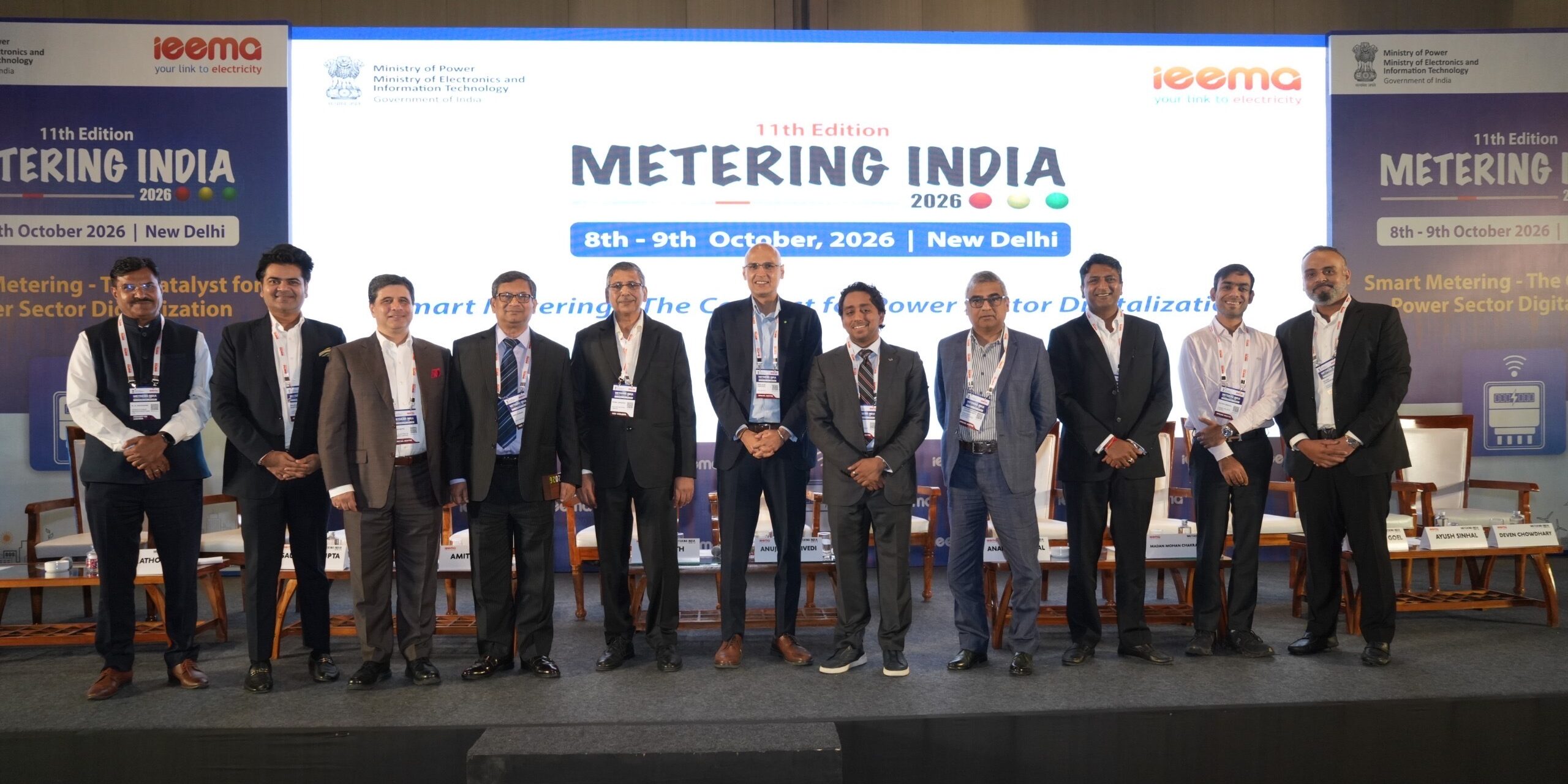
Kimbal Participates in Metering India 2026, Highlighting the Need to Strengthen India’s Smart Metering Ecosystem
Published on 13 October 2026




Smart meter reading is the automatic collection and transmission of electricity consumption data from a smart meter to a utility company without requiring a manual meter reading visit. Unlike traditional electricity meters that are read once a month, smart meters record usage at regular intervals and send data digitally through a communication network. In this guide, you will learn what smart meter reading is, how smart meter readings work, how often smart meters send readings, how smart meter reading systems are structured, the difference between smart and traditional meter reading, the benefits of automated meter reading, common challenges, and how consumers can access and understand their own smart meter data.
Few households across India still depend on manual meter readings for electricity billing. A meter reader visits the premises, notes the reading, and shares it with the utility. This process takes time and can lead to delays. Smart meters, changes this experience completely by recording electricity consumption automatically and shares the data with the utility through a secure communication network. Households receive accurate bills and can track their electricity usage more easily.
Think of a smart meter as a fitness tracker for your home’s electricity use. Just as a fitness tracker records your activity throughout the day, a smart meter records electricity consumption and shares updates at regular intervals.
A smart meter reading system, formally known as Advanced Metering Infrastructure (AMI) is the full stack of hardware, software, and communications that makes automated readings possible. It is not just the meter; it is an integrated ecosystem.
Key components
Together these components create a system where every reading is traceable, tamper-evident, and available to authorised parties within minutes.
Learn more: Smart Meters in India: Benefits, Prepaid Model, RDSS and More
Smart meter reading is the automatic collection and transmission of electricity consumption data from a smart meter to a utility. The meter records usage at regular intervals and sends the information digitally. Utilities receive up-to-date consumption data without requiring a site visit.
Traditional electricity billing relies on a single monthly reading. Smart meter reading provides a continuous stream of consumption information throughout the billing cycle. This data helps utilities improve billing, monitor network performance, and identify service issues quickly. It also helps households understand how and when they use electricity.
Imagine checking your bank balance only once a month. You would know the final amount but not how you spent your money during the month. Electricity consumption works in a similar way. Smart meter reading shows how electricity usage changes throughout the day. Households can identify high-consumption appliances, track usage patterns, and make informed decisions about energy consumption. The utility receives the same information and can respond faster to outages, faults, and network issues.
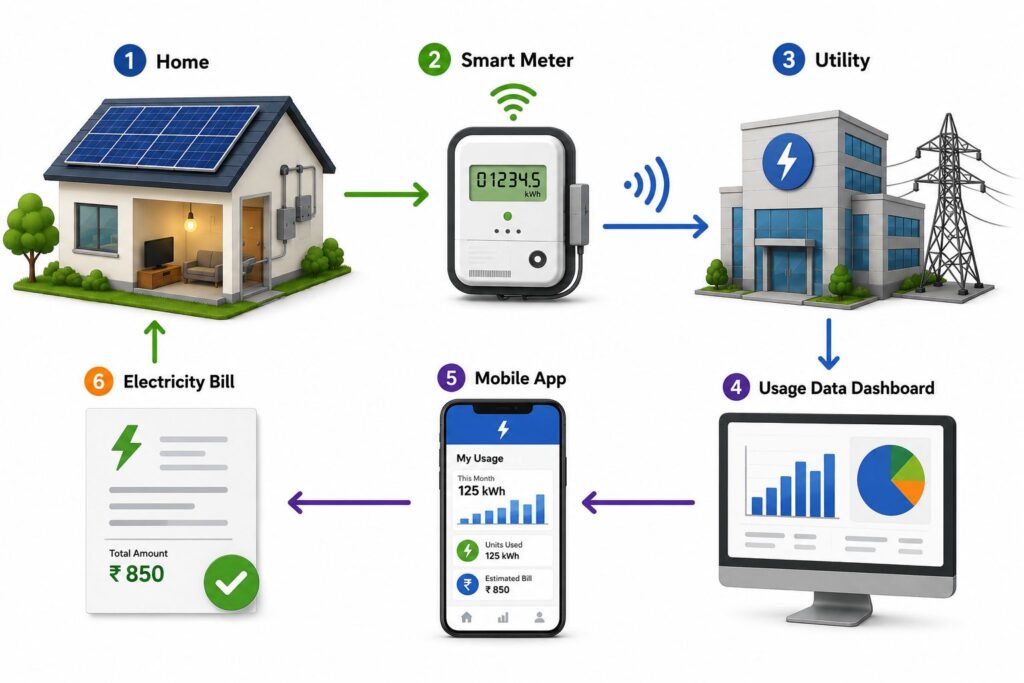
Benefits of automated smart meter readings at a glance:
How does smart meter reading works
Smart meter reading is an end-to-end pipeline that typically completes within minutes of a reading being taken at the meter. Here are the details of the process that is followed:
Learn more: How to recharge your Smart Meter Online and Offline in India (2026 Guide)
How Often Does a Smart Meter Send Readings to DISCOMs?
Most smart meters send readings every 15, 30, or 60 minutes. The exact frequency depends on the utility’s configuration and operational requirements. Some smart meters also send immediate alerts for important events such as power outages, tampering attempts, or voltage fluctuations. Regular updates give utilities a clearer view of electricity demand. Households also gain access to more detailed consumption information.
How Accurate Are Smart Meter Readings?
Smart meter readings provide a highly accurate record of electricity consumption. The meter measures usage electronically and records readings automatically. Smart meters installed in India comply with national standards and undergo testing before deployment. As a result, households receive bills based on actual consumption recorded by the meter.
A smart meter records much more than electricity units consumed. Depending on the deployment, a smart meter can capture: Electricity consumption (kWh), voltage levels, current, power factor, load profile data, outage events, tamper alerts and recharge information for prepaid consumers. This information helps utilities maintain reliable service and improve grid operations.
Learn more: What is a Unit in Electricity, how much does a unit of electricity cost in India
How to Check Your Smart Meter Reading
You can check your smart meter reading in several ways.
Checking your reading regularly helps you understand your electricity usage patterns and take necessary steps in optimising consumption.
Can Smart Meter Readings Be Wrong?
Smart meter readings are highly reliable. However, any technology system can experience occasional issues. Factors that may affect readings include:
Consumers can verify readings through the meter display and report concerns through their utility’s support channels. Utilities investigate reported discrepancies and resolve them according to regulatory guidelines.
Learn more: How to Read Your Smart Meter Display: 2026 Guide for electricity consumers in India
What Happens if a Smart Meter Loses Connectivity?
Smart meters continue recording electricity consumption even when communication becomes unavailable. The meter stores readings securely in its internal memory. Once connectivity returns, it sends the stored information to the utility. Think of it like a messaging app that sends pending messages after the internet connection returns. This feature helps maintain a complete consumption record.
Use the calculator below to get a rough estimate of your electricity consumptions and estimated cost
| Criterion | Traditional meter reading | Smart meter reading |
| Frequency | Monthly (or less) | Multiple times during a day |
| Method | Field technician visits | Fully automated, wireless |
| Accuracy | Estimated bills common | Exact measurement |
| Error rate | Transcription errors frequent | Digitally validated, minimal errors |
| Consumer visibility | Monthly bill only | Real-time usage dashboard through a mobile app |
| Remote control | Not possible | Remote connect/disconnect |
| Fault detection | Reactive (complaints-driven) | Proactive, automatic alerts |
| RDSS compliance | Limited | Fully aligned |
Learn More: What is RDSS and how does it impact households?
Kimbal has deployed over 12 million metering endpoints across 23 states in India, making it one of the country’s largest AMI providers. Every deployment is backed by a 99% SLA on data delivery, ensuring utilities receive the interval readings they need for billing and regulatory compliance.
Explore Kimbal’s smart meter solutions →
How often does a smart meter send readings?
Most smart meters are configured to send readings every 15, 30, or 60 minutes, depending on the utility’s AMI settings. Some networks support push-on-change for critical events such as outages or tamper alerts, which are transmitted immediately regardless of the scheduled interval.
Can I still read my smart meter manually?
Yes. Smart meters have an LCD or e-ink display showing the current cumulative reading in kilowatt-hours (kWh), just like a traditional meter. You can cross-check this figure with your utility bill or DISCOM consumer app at any time.
Learn more: Smart meter manual and what exactly does the display on your meter mean
What happens if the smart meter loses signal?
Smart meters store readings locally in non-volatile memory when communication is interrupted. Once connectivity is restored, the meter uploads its buffered readings in sequence, with no gaps in the data. Most meters can store 30-90 days of interval data locally.
How do I check my smart meter bill online?
Log into your DISCOM’s consumer portal (most state discoms offer a mobile app and website). Navigate to the billing or usage section to find itemised consumption for each billing cycle along with interval-level usage charts where available.
How do I calculate my smart meter bill?
Your bill is calculated by multiplying total units consumed (kWh) in the billing period by your applicable tariff slab rate. Because smart meters capture exact consumption, there is no estimation every unit used is counted. Check your state electricity regulatory commission’s tariff order for the applicable rate per unit. The slab rate at which your usage is calculated at differs state to state. It is also affected by the peak hours and non peak hours and consumption patterns.
Click here to calculate your monthly electricity bill
How do I get a new digital electricity meter for my home?
You can contact your local discom and request a smart meter upgrade. Under the RDSS programme, many discoms are proactively replacing legacy meters at no upfront cost to the consumer. Check your discom’s website or call their helpline to enquire about upgrade timelines in your area.
Do I need to pay for the smart meter installation at my home?
In most smart meter rollout programmes, the utility manages the installation process. Under government-led initiatives such as RDSS, many utilities install smart meters without requiring an upfront payment from consumers. Installation policies can vary by state and utility. If you would like to know the policy in your area, contact your local DISCOM or visit its website for the latest information.
Where do I report a faulty smart meter reading?
Report discrepancies through your discom’s consumer grievance portal, mobile app, or the national helpline number – 1912. Provide your consumer number, the date of the suspect reading, and the value shown on the meter’s display. Your discom is obligated under the Electricity Act to investigate billing complaints within a specified timeframe.
Note: The information in this guide is based on publicly available resources from government agencies, standards bodies, industry organisations, and electricity distribution utilities. Policies and smart meter programmes may vary by state and utility.
Published on 13 October 2026

Published on 7 October 2026

Published on 6 October 2026
Your email address will not be published. Required fields are marked *